

Hey friends, Chase here.
Every summer, I revisit conversations from the archive that have stood the test of time. Not because I’m nostalgic, but because the best ideas don’t expire. They deepen.
This is the sixth and final installment of Summer School 2026—episodes I personally returned to most this year when I was stuck, blocked, or facing a very particular need.
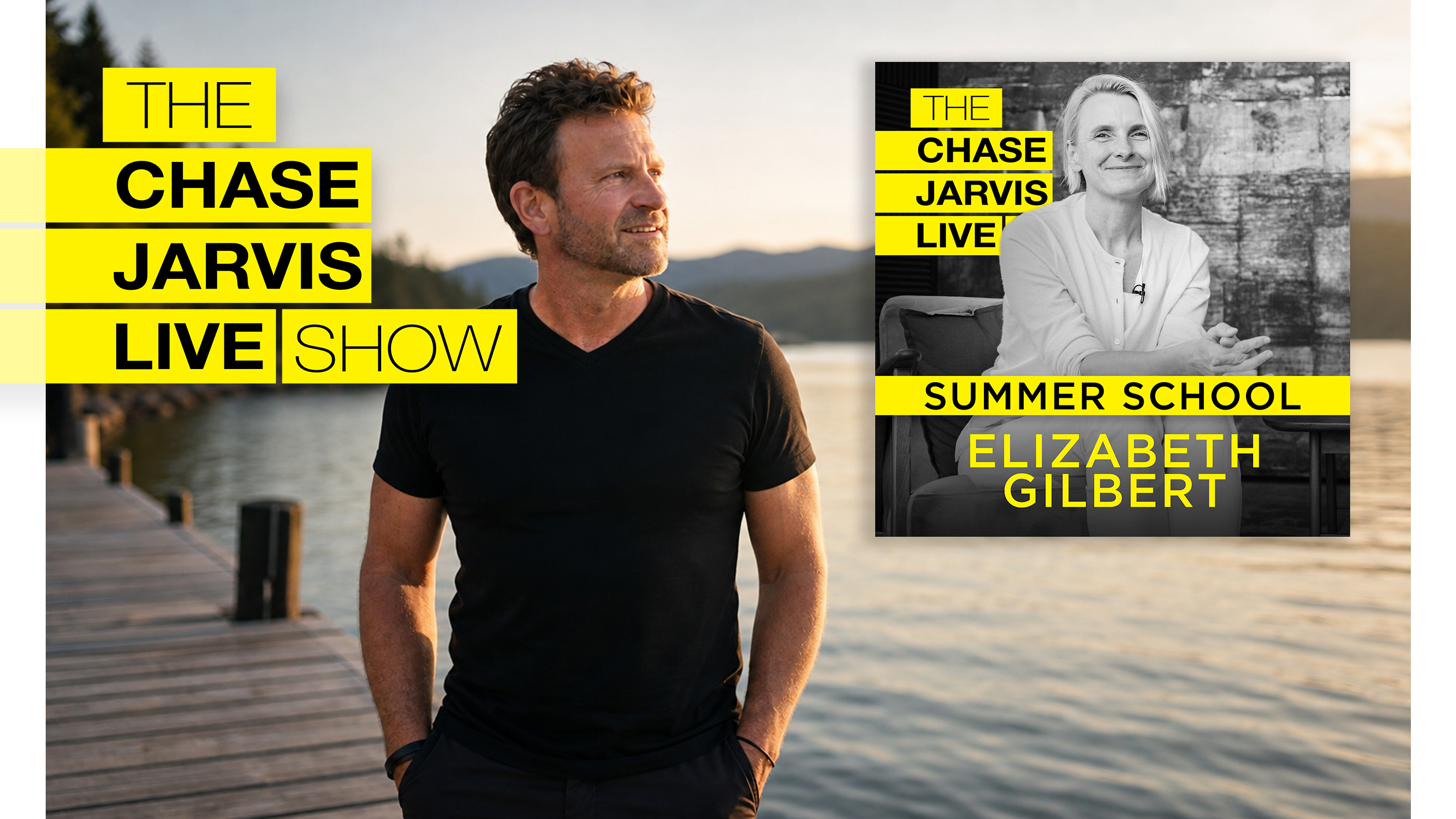
This one with Elizabeth Gilbert is the closer for a reason.
I kept finding myself spending so much time navigating my internal landscape that it felt like it was taking me away from everything I wanted to do out in the world. And then I remembered something Liz said that rearranged the frame: she considers mental health her full-time job. Writing—being a professional creator—is a hobby she does on the side.
That line alone is worth revisiting every summer.
Liz Gilbert is the bestselling author of Eat, Pray, Love (more than 12 million copies), a Time 100 most influential person, novelist of City of Girls, and the rare creative who can talk about fear, mercy, grief, and truth-telling without flinching—and without performing enlightenment. She’s a force of nature. Spend a few minutes with her and you’ll know why.
In this conversation, she makes the case that the way out of pain is through honesty. That grace can take you places hustling can’t. That mercy is the foundation of any healthy creative life. And that you make the world safe for yourself by telling the truth in it.
Grace can take you places where hustling can’t.
🎧 Listen to the Episode Right Here:
Summer School: Elizabeth Gilbert on Truth-Telling, Mercy, and the Art of Being Yourself
Liz opens with City of Girls—a novel about promiscuous girls in 1940s New York theater who behave recklessly with their sexuality and aren’t ruined by it. A palate cleanser, she jokes, from Anna Karenina: one orgasm and then you’re under the train. Underneath the glamour is a deeper subject: how do you become yourself? How do you just be—not a role, not a brand, not a performance of “good girl”?
Her aspiration is almost revolutionary: to be the most relaxed person in every room she’s in. To show what it might look like for a woman—for anyone—to be at ease in a world of nearly universal anxiety.
How do you get there? Not by hustling harder. Through foundational, almost unbelievable honesty—truth to yourself and truth to others. Spending most of the day saying no. Ending the hustle so grace has room to work.
Her great love and teacher, Rayya (Ria in the transcript), lived by a line Liz now lives by too: the truth has legs. It’s the only thing left standing in the room at the end of the day. Everything else blows up into drama. Since you’re going to end up at the truth anyway—why not start there?
If you’ve ever felt that taking care of your inner world is somehow stealing time from your “real work,” this episode will reframe that entirely. The care is the real work.
What You’ll Hear in This Episode
- Why City of Girls is about becoming yourself—and why “just being” is rarer than we admit
- Liz’s aspiration to be the most relaxed person in the room—and why honesty makes that possible
- “The truth has legs”—and how Rayya schooled her in radical truth-telling
- How withheld truth eventually breaks the body and mind—and why die-or-tell-the-truth becomes the only choice
- Why people-pleasing is really self-protection, not generosity
- Creativity and fear: being just 1% more curious than you are afraid
- A working definition of a creative life: decisions based more on curiosity than fear
- Mercy as the foundation—for self, for others, for the inevitable disappointment of making imperfect work
- Mental health as the full-time job; writing as the side practice
- The daily dialogue with Love that has saved her life for 20 years—and why writing slows the mind
- What to do when you’re creatively stuck: walk away and do something with your hands
Truth Has Legs
Liz is clear: try to have a completely honest relationship with at least one person in your life—and it’s best if that person is yourself.
When she was younger, she thought she couldn’t tell the truth because the world wasn’t safe for it. Later she learned the reverse: you make the world safe for yourself by telling the truth in it.
Around 30, the first major truth she couldn’t say—ending her marriage—nearly destroyed her. Sleep gone. Appetite gone. Twenty pounds lost. Mental health broken. Physical health broken. Die or tell the truth. She finally told it. Instead of killing her, it brought her to life. And if she’d said it two years earlier, it would have been a greater gift to him as well.
People-pleasing, in her frame, isn’t kindness. It’s manipulation for perceived safety. The other person deserves to know who they’re actually talking to.
And truth-telling isn’t a one-and-done graduation. Life keeps offering another chance to be brave. The only way out is through honesty. Do it again. Trust builds. It gets easier—not because the stakes drop, but because you finally believe the method.
Rayya’s cancer journey deepened this. When Liz couldn’t cope by clinging to her partner as salvation, she had to become the steady one. Wisdom she doesn’t share, she says, starts to hurt—like unused talent turns into pain. So she shares. Not out of marketing duty to readers. Out of self-preservation and love.
Mercy, Curiosity, and Mental Health as the Job
Asked for compressed creative advice, Liz answers in one word: mercy.
Mercy for yourself. Mercy for others. Mercy for the inevitable disappointment when what you make isn’t the tourmaline butterfly you dreamed—when day one excitement becomes day two self-hatred. The only people who get to day three are the people who have mercy.
Ann Patchett’s image: smash the gemstone butterfly on day one, then make the weird little thing out of chewing gum and baseball cards and twigs—and say, good job, self. No one’s ever made one like that before.
That’s compassion: ending the argument against reality. This is what we’ve got. Flap flap. A piece falls off. Keep going.
On fear, Liz’s saving grace is curiosity—just 1% more curious than afraid. That’s enough. Her definition of a creative life isn’t watercolor class. It’s any life where your decisions are routinely based more strongly on curiosity than fear. Then the life itself becomes the work of art.
And here’s the Summer School lightning bolt: an enormous percentage of Liz’s days is spent managing her mental health—the “dysfunctional family” inside her mind. Writing is what she does on the side. She was managing her mental health on the plane that morning. There are very few days off from saving her own life.
Her primary practice for twenty years: a daily dialogue with Love (capital L)—writing the words she always wanted someone to say. I’m right here. I’ve got you. You can’t tire me out. Love doesn’t need the room to be different. Love doesn’t issue a five-point improvement plan. Love is company in the darkest hour.
Writing slows the mind enough to receive that. When creativity is stuck? Don’t force the tormented artist fantasy. Walk away. Garden. Fix a bicycle. Power-wash a driveway. Get out of your head and into your hands. Inspiration returns after embodiment—not after more self-punishment.
Timecodes So You Can Jump Around
- 00:00 – Welcome and why this episode closes Summer School 2026
- 04:24 – Liz joins; City of Girls, becoming yourself, and the aspiration to be relaxed
- 13:32 – Honesty, saying no, and “grace can take you places hustling can’t”
- 15:12 – Rayya, addiction, and “the truth has legs”
- 19:00+ – The first major truth at 30: breakdown, then coming alive
- 22:23 – Truth-telling and creativity; Eat, Pray, Love as a story of learning to tell the truth
- 30:00+ – Rayya’s illness, grief, and why unshared wisdom becomes pain
- 36:14 – Fear, curiosity, and the definition of a creative life
- 38:51 – Mercy: the foundation (and the tourmaline butterfly)
- 43:40 – Mental health as the full-time job; writing as the hobby
- 45:00 – The daily dialogue with Love
- 51:38 – Scrapping a book, gardening, and what to do when you’re stuck
- 54:21 – Paint bicycles / power-wash driveways: walk away into the present
Why This Conversation Still Matters
We still live in the anxiety virus Liz named—exported globally, amplified by politics, climate dread, and the demand to be a thing at all times. Creators still treat self-care as optional overhead between “real” output. Hustle culture still pretends grace is lazy.
This conversation is the antidote.
Mental health isn’t what you do after you’re successful. It’s the work that makes everything else possible. Truth isn’t a brand strategy. It’s how you stop poisoning your own body with secrets. Mercy isn’t soft. It’s the only way anyone ever reaches day three.
That’s why this episode earned the final Summer School slot. The year asked a lot of our inner landscapes. Liz’s answer is still the one that helps me return to the world without abandoning myself: tell the truth. Tend the mind. Prefer curiosity over fear. Make the imperfect butterfly. Keep company with Love.
Class dismissed—until next summer.
Keep Going Deeper
If this conversation resonates:
- City of Girls
- Big Magic
- Eat, Pray, Love
- Liz online: elizabethgilbert.com
Follow Liz: Instagram | X/Twitter | Website
Questions to Reflect On
- Where am I hustling for a result that only grace—and honesty—can deliver?
- What truth do I already know I’m going to end up telling—and what would it cost to start with it?
- Am I making the world safer for myself through honesty, or waiting for the world to feel safe first?
- Where has people-pleasing become self-protection dressed up as kindness?
- In my creative work, am I on day two (self-hatred) or practicing the mercy that gets me to day three?
- If mental health were my full-time job this week, what would change about how I schedule my days?
- When I’m stuck, am I forcing the art—or am I willing to power-wash a driveway and return to the present?
The Core Idea
You don’t graduate from truth-telling. You practice it. You don’t earn rest by producing enough. You save your own life daily so you have a life worth creating from.
Liz’s invitation—as the last lesson of this Summer School season—is both soft and severe: tell the truth until the room is safe. Put mercy under every creative attempt. Be just slightly more curious than afraid. Tend the warring neighborhood in your mind like it’s the job. Write love to yourself when no one else can hold the need. And when the work won’t move—move your body instead.
If there’s one lesson worth carrying forward from this final Summer School session, it’s this:
Mental health is the work. Creativity is what you get to do when you’ve tended it—and the only way out of the hard parts is through honesty.