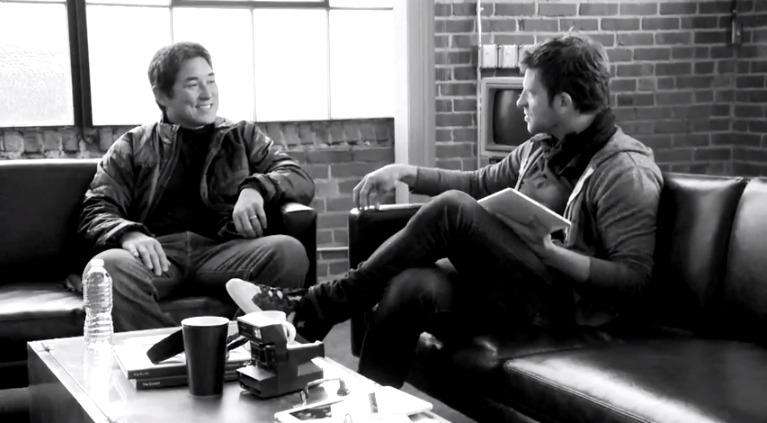
If you’ve been in the creative or entrepreneurial world for any length of time, you know the name Guy Kawasaki. For those who don’t, his career is the stuff of Silicon Valley legend. Guy was one of the original Apple employees responsible for marketing the Macintosh in 1984. He was the chief evangelist for a brand that would go on to change the world, a title he now holds for the design powerhouse Canva. In the years between, he’s been a prolific author, speaker, venture capitalist, and host of the Remarkable People podcast.
Guy is one of those rare people who has not only shaped the technology landscape but has also consistently worked to demystify it for the rest of us. He has a knack for cutting through the noise and delivering wisdom that is as practical as it is profound. He sees the patterns that connect remarkable people and has dedicated his later career to sharing those insights so that others can make a difference in their own way. He translates high level concepts into actions we can take today.
I’m incredibly fortunate to call Guy a friend and mentor. Years ago, back in 2009 when I had an idea for a startup, Guy was one of the first people I shared it with. He believed in the vision enough to make a few key introductions, opening doors that would have otherwise been locked. That company became CreativeLive. I owe him a huge debt of gratitude for that early grace. Since then, he’s been a guest on my podcast and even taught classes on the CreativeLive platform, continuing his mission to empower creators.
During our most recent conversation, Guy shared a handful of ideas from his latest book, Think Remarkable. They were too good not to share. These are not just motivational platitudes; they are frameworks for building a more meaningful creative career and life.
Scratch Itches, Don’t Hunt for Passion
We put so much pressure on ourselves to find our “Passion” with a capital P. It’s this mythical, singular calling that we believe will solve everything. Guy argues this is a flawed approach. Instead of searching for one great passion, we should focus on our “interests” with a lowercase i. These are the little curiosities, the itches that we feel compelled to scratch. Podcasting, photography, surfing, coding, whatever it might be. By exploring many interests without the pressure of them needing to be the one, we allow a true passion to emerge organically.
- Default to Yes. When an opportunity to try something new presents itself, just say yes. You can figure out the details later. The goal is to collect experiences.
- Sample Widely. Don’t lock yourself into one lane too early. Treat your creative life like a buffet. Try a lot of different things to discover what truly resonates with you.
- Follow Curiosity, Not a Grand Plan. You can only connect the dots looking backward. Trust that by pursuing what genuinely interests you today, you are laying the groundwork for a future you can’t yet imagine.
Remarkability is a Byproduct of Doing Good Shit
No one decides to become remarkable and then reverse engineers a plan to get there. It doesn’t work that way. Remarkable people, from Jane Goodall to Steve Jobs, don’t set out to build a personal brand. They set out to make a difference. They focus on creating something that makes the world a better place, even if it’s just for one person, one team, or one community. Remarkability is the natural outcome of doing good, meaningful work.
- Stop Thinking, Start Doing. There are a lot of people thinking about doing good shit. There are far fewer actually doing it. Your primary focus should be on implementation and execution.
- Focus on Service. Ask yourself, “How can my work help someone else?” When your motivation shifts from personal gain to providing value for others, your work gains a deeper sense of purpose. This is the core of evangelism, not sales.
- Trust the Process. If you create something genuinely valuable, the marketing becomes much easier. Believe that if you do good shit, the right people will eventually find it.
Find the Work Where You Love the “Shit Sandwich”
Every calling, no matter how glamorous it seems, comes with what author Mark Manson calls a “shit sandwich.” It’s the unappealing, grueling, and tedious work that you have to eat to get to the good parts. For a writer, it’s the endless edits. For a photographer, it’s the thousands of hours spent culling and processing images. Most people just tolerate the hard parts. But when you find the work where you actually love the shit sandwich, you know you’ve found your thing. You are so compelled by the mission that you embrace the entire process, struggle and all.
- Identify the Grind. Look at your current projects. What are the parts that feel like a slog? What are the parts that others complain about but that you secretly enjoy?
- Reframe the Struggle. See the difficult parts of your work not as obstacles, but as the price of admission for doing something you love. The challenge is part of the reward.
- Listen to Your Actions. When you find yourself willingly putting in the hours on the hard stuff, without anyone forcing you, you are on the right track. That is where your true dedication lies.
PS – If you’re looking for a guide to help you build the life and career you’ve always wanted, the Seven Levers for Life is a free 7-day email course on just that.