

I learned to light after years of deconstructing the work of other photographers. And I know from your previous feedback that you guys are fond of these posts, so let’s dig into another one.
How did I make this picture?
Is it a lucky snapshot?
Is it lit?
If so, how?
The camera Settings?
The direction?
Post production?
Whatever details you think are needed to make this image.
Looking forward to you trying to pick this apart… I’ll reveal everything in a followup post. The person who gets the closest gets… …a chest bump and a pizza, or signed book or something. Don’t be shy. Let er rip.










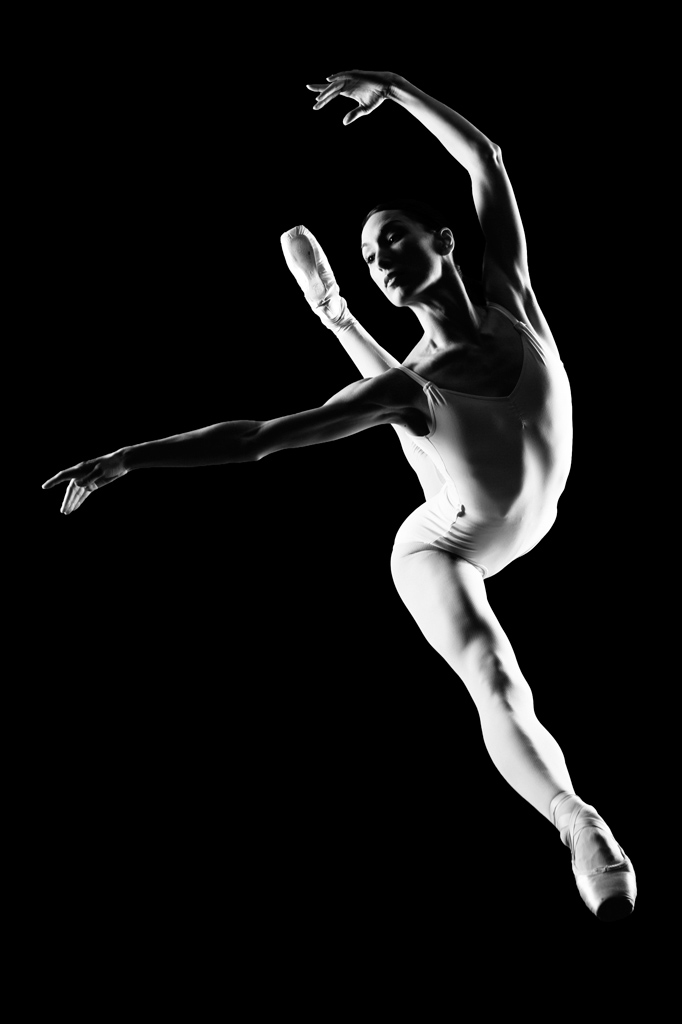
Lucky snapshot…Definitely not.
Is it lit…For sure.
How so?
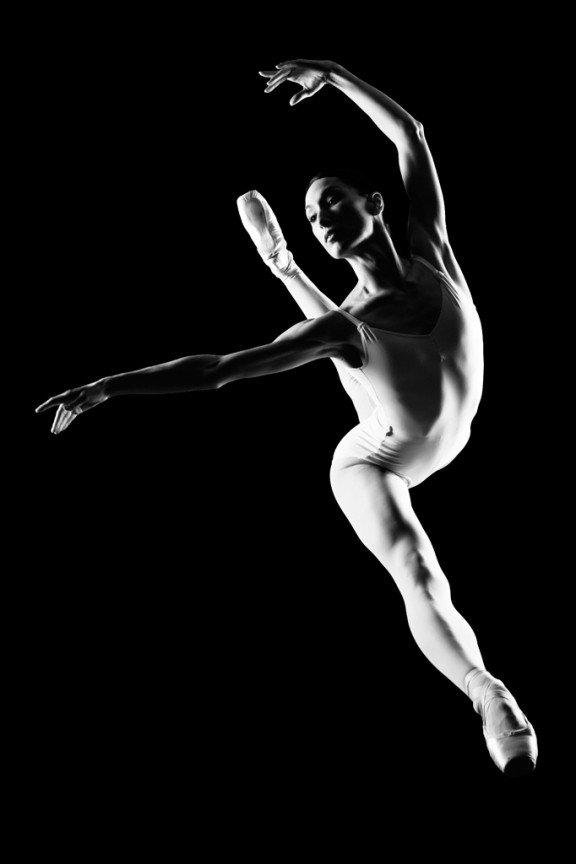
There are two light sources in the image. One is to the left and one is to the right. Both lights are slightly behind the parallel horizontal. For the light light lighting up the left side of the image, i would say maybe 1-3 degrees from the horizontal line (in other words, just so slightly behind it). I would say no larger than a medium to large grided softbox (in portrait orientation) and approx 6-9 feet away. The center of the light seems to be about the height of her right shoulder. (right shoulder appearing on the left side of the image) There is a little bit of light fall off between the back foot and the front foot indicating the lights were not too close since the light falloff would be greater than appears in the image. If the lights were at a very long distance, there would be virtually no light falloff between the back foot and the front one. The light lightingup the right hand side of the image is a little bit more at an angle from behind. If it was directly to the side, more of the front of her chest would be illuminated. This light would also be in portrait orientation but slightly angle to fllow the lines of her body. . The right hand side of the image seems to have been lit by a grided stripbox or softbox with the top being equal to the height of her hand + a few inches but pointing 20 degrees downwards so that the light falloff just rims the top of the hand. The fact that there’s no light on her hair would indicate that the arm is blocking the light therefore the lightsource can’t be very wide. But with a grided softbox at a far enough distance it could cast a shadow directly in line with her hair. (which seems to be pulled back).
Let me add one more lighting condition. If the room it was being done in was very large, you would use some type of matt surfaced reflector (white foam or something similar to bouce a little bit of the light back onto her. There is some detail in the shadow area. If it was done in studio, often that reflector isn’t necessary since the light bouncing around inside is enough create that slight fill so you don’t have total black shadows. Looking at the image it definitely looks like light bouncing around since it appears everywhere on the girl. (example, on the hand, (her actual left hand located on the right hand side of the image) an also on her actual right arm.
Camera settings
ISO 100 – Although you use Nikon so I’m guessing ISO 200. I haven;t checked to see if some of the new Nikons use ISO. In either case, the lowest ISO possible and a high enough F-stop available that will black out the background. (you’ll want a minimum of F8 for depth of field) but you could go as high as F13 if your lights will allow it – I know your lights will allow it lol, but i meant in general) Your shutter speed will be set to the maximum speed allowable to be set according to your lights. Typically 1/200th of a second. If you have If you are using fancy pocket wizard trickery you may be able to push it a little faster. Either way, I’m sure your Profotos have a short enough flash duration to freeze the action. This is the other reason why I said th lowest possible F-stop to acheive black out. The lower the F-stop, the lower you can set your lights and the faster the flash duration will be.
The beauty about this shot is it could be shot virtually in any room with or place where you have a large enough space. If you have a 10 foot ceiling in a 25×20 room, you’re all set. Anything bigger and you it’s icing on the cake. You may have to control light bouncing off the walls if all the surrounding walls are painted bright white. If this is done in a very large space, you don’t even need a background. Since all the light is pointing slightly in the direction of the camera, the background acts as a void. Having a large black background would help if any to control the possibility of the light hitting the floor located behind her foot in the image. (although it would be very dim back there if any) But assuming she can jump high enough which it definitely looks like she can, I would say it’s not a major concern. Could it be done in a small room, yes but like i said, you might want to cover some/most of the walls and background with black fabric. If you can’t get a space to shoot this, it could be shot in most people’s backyards at dusk, dawn, or nightt time since the ambient would be low enough not to interfere.
The camera position
I would say you are shooting at average height since by the time she jumps, her hip would be near you eye level. I would estimate 85mm on a full frame camera.
Direction
Most dancers are pretty good at being precise with her jumps and looking at the ways her toes are poointed I would say this girl has been dancing for a while and is quite good. So the easiest way would be to set a peice of tape on the floor where she is to start from every time she jumps for consistency, you can use a tripod to properly frame you image, keeping some room for inconsistencies form left to right with the jumps and also in height. Have the girl jump over and over again taking a few breaks in there since it gets tireing jumping over and over. The shot is taken at the top of the jump right when she hits the peak at (at the point where she’s about to come down). It’s at that time there is less movement. This will also help freeze the action depending on the flash duration of a person’s lights. The reason i mention this is becuase my ABs don’t have the best stopping power.
And finally…Post
The nice thing about an image like this is that it requires very little post. Convert the image to black and white then dodge and burn any areas you wish to have darker or brighter. But there isn’t much complex photoshop work involved in this image.
Last of all…I’d like to thank you Chase for all the cool stuff you do for your fellow bloggers. You always have awsome ideas and interesting concepts. I wish i had the time to do the same…someday lol. Hpefully I’m pretty close, if not I’m gonna look like a complete A$$! lol
I think that you have two set of lights, one from the left about 45 degrees behind the dancer and it is facing the dancer at 45 degrees from above, facing down on the dancer. The second light is on the rights side of the dancer, this one positioned to the right of the dancer, a bit below the dancer facing directly to the left (from the cameras point of view). The lights are pretty hard, so I´d say that no umbrellas or softboxes were used.
camera settings: f11, 1/250, iso 200
post production: b/w, some adjustments to the contrast
I’m going to go with snap shot, the way I picture it you were probably setting up another shot, up on a theatre Stage Fly tower standing on the Grid.
You look down at her streaching, on the typically black floor of the Stage and sudently recognized the photo to be made. She is lit by either some stage lighting or a couple of doors on the stage left open (maybe one of each). Use one of your long lenses (atleast 200) because if you are on the Stage Grid you are probably 60-80 feet above her.
You probably took some from right above her, but liked the slightly infront/top view better. At post you turn B/W and help the black floor go completelly black, maybe rotate a bit if she was to straight in the frame.
Or I’m completelly off and your brilliance set up the entire thing….it just didnt look like what I think your set up photos normally look like.
We do this all the time at dance schools. A cross lighting from behind setup. A strip light on right rear corner. A sofbox likely off the left rear side a little elevated. Gobos preventing spill on your background/floor. The two additional lights from low add punch to the mid section while the edge lighting is done by higher sources.
Great control of the light and shadow!
The light in the eyes is nicely done.
She’s suspended from a crane by lots of cables over Central Park which means post processing superpowers must be used. You’re using a telephoto lens because the crane got stuck haflway down and a fast shutter and a tripod because of a strong breeze frome the southwest is causing motion blur.
Kidding.
You’re below her shoothing through a very very clean clear surface. She is lit from the sides but more behind her at an angle to give shadows on the front of her body. High ISO, aperture 2.8, sync shutter speed.