


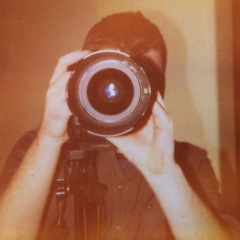
 Hey all, Erik here with a quick guest post about a subject that’s raised a lively debate in our studio. Everyone on our crew has long been shooting with Polaroids, rangefinders, micro 4/3 cameras adapted to accept vintage lenses…even processing digital images to look like they came out of an old dusty camera. Surveying the landscape, it’s clear this tide has been rising for a while now and we’re not the only ones attached to this stuff. So the question I present to you is this:
Why is retro or faux-retro photography so popular these days?
Why, when we have such capable and inexpensive cameras at our disposal, are we reverting to old technology and old aesthetics? Is it pure nostalgia? Is it a palette cleanser from the ease and accuracy of said capable and inexpensive cameras? Is it a passing trend? We have opinions–especially Chase does as you might expect–but we’d like to hear from you.










Back a few months ago I had my gear stolen. A lesson on the value of insurance. With every adversity carries with it a seed of great value. I purchased a Hasselblad medium format outfit from KEH. I couldn’t believe a $6000+ camera set up all for less than a grand. Shooting film has done so much for my growth. I’ve learned how to make every shot count. Thinking before clicking the shutter. Using a hand held light meter. Being more selective in what and why I shoot.
I think getting back to the basics and going retro is a great thing. I urge others to fall in love with photography all over again.
Couldn’t agree with you more. I recently purchased a Mamiya 645 and have started shooting film for the first time in my life. I love it. I find I think a lot more about composition and getting it right the first time as opposed to iterating like I do with digital.
I still love my Nikon and shoot it all the time, but I think shooting film is a good exercise.
Because its something different and not the usual.
There are a ton of reasons and I agree strongly with the perfection vs imperfection thing, but one of the main ones that I haven’t seen mentioned is that digital slrs and MF backs aren’t designed to produce RAW images that are good to go.
You’re looking at the RAW converter’s interpretation of the data, which by design is as flat and malleable as possible. In the most light-handed case you might only adjust contrast, WB, and sharpen, but you always need to adjust.
The beauty of film-simulated JPEG processing is that you take the shot and bam – you have the final image. But, you’re pretty locked in at that point. To some extent it’s the same deal with film if you’re not going to hand print or scan the neg/print. You pick your film which is designed to give you a specific look, hit the shutter release, and maybe tell the lab to do what you want in development, but then you go home and it’s out of your hands. Next day, chances are you have a final image that looks like a final image.
Like Tim said ‘It’s fun!’ – simple as that….
Also the aesthetic of a ‘vintage’ film somehow elevates a photograph from a snapshot to ‘art’.
I love app’s for the iphone which allow this because you can instantly upload them to the internet.
It’s a connection with the past, when automation didn’t exist: no AF, no multi-pattern metering, no program mode, no 11 fps; the photographer was the camera’s “CPU.” I grew up with the old LIFE and LOOK magazines. The B&W photos within were superb. I also had a B&W film darkroom. Does the odor of stop bath ever go away? Gloriously, no.