
Should photographers, designers and other creative pros be on TikTok as a marketing platform? The answer is maybe – and it largely depends on your mindset.
The biggest hurdle for experienced professionals on TikTok is their experience. The habits and best practices learned from years of building a presence on Instagram, Behance, or a personal website don’t apply here. In fact, they are often a liability. You have to unlearn the “portfolio mindset” to win.
TikTok is not so much a gallery for your finished work. It is a studio for your process. Your audience—the one that will actually hire you or buy your products—doesn’t just want to see the polished final image, the finished logo, or the published article. They want to see the struggle, the craft, the decision-making, and the expertise that happens behind the curtain.
The TikTok Algorithm: Your Unfair Advantage
To succeed, you have to understand that TikTok is not a social network per se; it’s an entertainment network driven by a powerful content discovery engine. Your content is not primarily shown to your followers. It’s served to strangers who the algorithm thinks will be interested in it. This is a game-changer.
How the “For You” Page Works
Unlike Instagram or Facebook, which operate on a “social graph” (who you know), TikTok uses an “interest graph” (what you like). When you post a video, the algorithm shows it to a small test group. It measures signals like:
- Watch Time: Did they watch the whole video?
- Completion Rate: What percentage of viewers finished it?
- Shares: Did they share it with someone else?
- Comments & Saves: Did they engage with it?
If the signals are positive, it pushes the video out to a larger audience with similar interests, and then larger ones still. This means a brand new account with zero followers can get millions of views on their first video if the content is compelling enough to the right niche. You don’t need an existing audience to get massive reach. You just need to create content that a specific group of people finds valuable.
Some solid ideas here (via Omar Gonzales)
Why Niche Content Wins
Because the algorithm is so effective at categorization, the more niche your content is, the better. General creative advice gets lost in the noise. Specific, high-level expertise finds its audience with startling accuracy.
For example, instead of a video titled “How to Edit a Photo,” a better video would be “Fixing Skin Tones in DaVinci Resolve Using a Parallel Node.” The first is for everyone, and therefore for no one. The second is for a very specific subset of professional video colorists, and the algorithm will work tirelessly to place it directly in front of them. This is how you attract high-quality followers who see you as an authority, not just an entertainer.
A Practical TikTok Marketing Strategy for Creative Professionals
A successful strategy isn’t about chasing trends or spending hours learning complex video transitions. It’s about documenting your existing workflow and sharing your expertise in a low-friction way.
It’s a “Process” Platform, Not a “Portfolio” Platform
The core of your content should be showing how you work. This builds trust and demonstrates your value in a way a finished product never can.
- For Photographers: Don’t just post the final shot. Post a screen recording of your retouching process in Photoshop or Capture One. Show your on-set lighting setup, explaining your choice of modifier (e.g., “Here’s why I’m using a 5-foot octabox instead of a beauty dish for this headshot”).
- For Designers: Record your screen while you work. Show the vector-building process for a complex logo in Adobe Illustrator. Talk through your grid setup for a layout in InDesign. Show 3 discarded concepts for a project and explain why the final one was chosen.
- For Writers: Don’t just share a link to your article. Use the text-on-screen feature to show a poorly written sentence and then reveal your edited, improved version, explaining the grammatical or stylistic reasoning behind the change. Talk through your outlining process for a complex piece.
Creating Your Content Flywheel
You don’t need a separate content production schedule for TikTok. You need to integrate documentation into your existing work.
- Document, Don’t Create: Get a simple tripod for your phone, like a Manfrotto PIXI, and set it up to record while you work. If your work is digital, use screen recording software like OBS Studio or ScreenFlow.
- Identify “Micro-Lessons”: As you edit or design, you’re constantly making small, expert decisions. Each one of these is a potential TikTok video. Did you just use a specific Photoshop action to speed up your workflow? That’s a video. Did you solve a tricky kerning problem? That’s a video.
- Edit for Clarity: Use a simple editor like CapCut (it’s free and made by the same company as TikTok). Your goal is not a cinematic masterpiece. It’s a clear, concise piece of information. A simple workflow is to trim your screen recording to the most interesting 15-30 seconds, add a voiceover explaining what you’re doing, and use the auto-captioning feature.
Gear, Settings, and Sound
Again, simplicity is key. High production value can even feel out of place and hurt your performance.
- Video: A modern smartphone is all you need. An iPhone 13 Pro or a Google Pixel 7 or newer is more than capable. Shoot in 4K at 30fps. The most important factor is good lighting. A simple ring light or a softbox like the Aputure Amaran 60d can make a huge difference.
- Audio: This is more important than video quality. Viewers will forgive mediocre video, but not bad audio. An internal phone mic is often not good enough. Invest in a simple, high-quality microphone like a Rode Wireless GO II or even a wired lavalier mic that plugs directly into your phone.
- Sound: You can use trending sounds, but do so strategically. Use them as quiet background music underneath your voiceover. This can give the algorithm an initial signal to help categorize your content, but the primary value must come from your expert commentary.
Beyond Views: Driving Real Business Outcomes
Vanity metrics like views and likes are meaningless without a strategy to convert that attention into tangible results for your career and business. The goal isn’t to become “TikTok famous”; it’s to leverage the platform to build your email list, sell your products, and land better clients.
The “Link in Bio” is Your New Funnel
Once you reach 1,000 followers, TikTok allows you to put a clickable link in your bio. This is the single most important piece of real estate on your profile. Do not link directly to your homepage. Send this traffic to a specific, high-value destination.
A powerful strategy is to direct them to a lead magnet that captures their email address. This moves them from a platform you don’t control to an asset you own: your email list. If you’re looking to build a more resilient and creative life, a great place to start is the Seven Levers For Life signup page. It’s a free, 7-day email course designed to help you build a life you love, which is the entire point of building a successful creative business.
From Viewer to Client
The comments and DMs on TikTok are a direct line to your future clients and customers. When someone asks a detailed question about your process, they are qualifying themselves as a serious potential lead. Answer them thoughtfully. This is your opportunity to demonstrate your expertise and build a relationship.
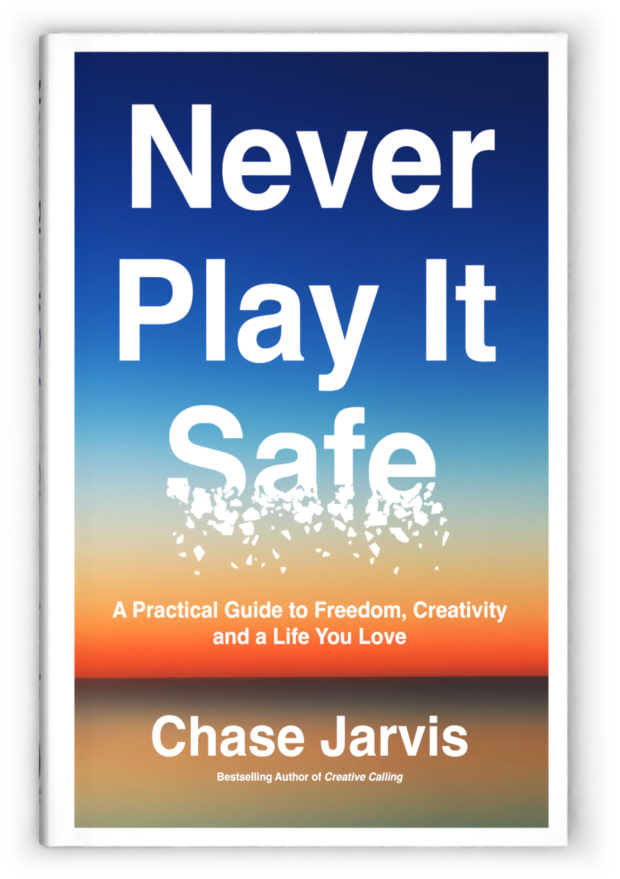
This is often the hardest part—stepping out of your comfort zone as a creator and into the role of an entrepreneur on a new, unfamiliar platform. It requires a willingness to experiment and possibly fail in public. For a deeper understanding of why this is the key to unlocking true creative growth and fulfillment, explore this free chapter from the book “Never Play It Safe.” It’s built around the core idea that daring to take these kinds of bold steps is what separates a good creative career from a great one.
Summary
It’s time to reframe your understanding of TikTok. Stop seeing it as a silly app for kids and start seeing it for what it is: a powerful client acquisition and audience-building tool fueled by a sophisticated discovery algorithm.
- Shift Your Mindset: It’s a platform for your process, not your portfolio. Document your work and share your expertise.
- Trust the Algorithm: Go niche. The more specific and advanced your content is, the more effectively the “For You” Page will connect you with your ideal audience.
- Keep it Simple: Use the gear you already have. Focus on clear audio and straightforward content. Consistency beats production value every time.
- Have a Goal: Your objective is not to get views. It’s to drive viewers off the platform to a destination you control, like your email list or a product page. Use the “link in bio” strategically to turn attention into an asset.