


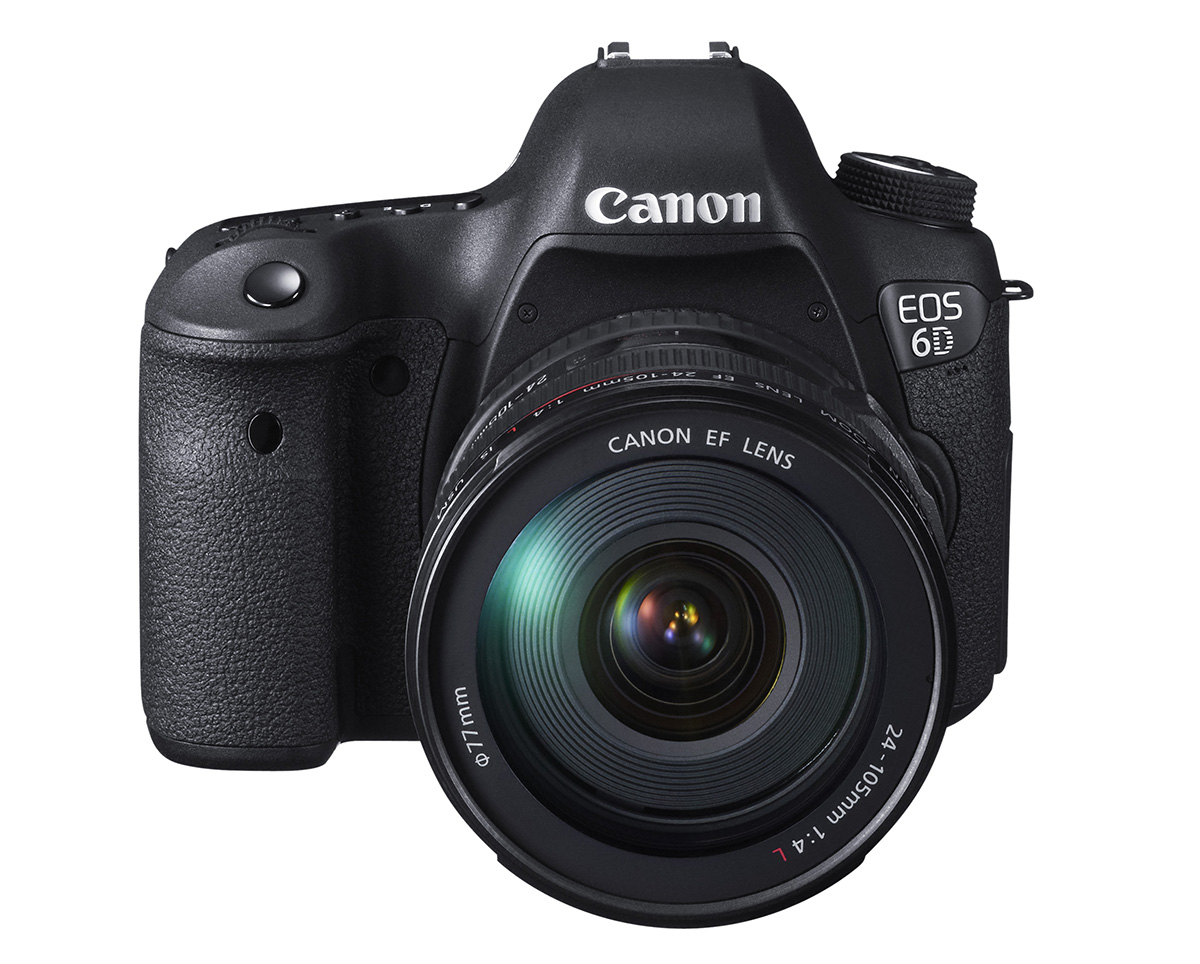
 It seems our exploratory swim in the waters of full-frame DSLRs is far from complete. With the ink from his recent reviews of the D600 and the mirrorless Panasonic GH3 still drying, I asked my homie Ben Pitt to put the Canon EOS 6D between his microscope plates and share his findings here. As you’d expect with a lower-priced semi-pro camera, the EOS 6D is a mixed-bag. It’s light and boasts integrated GPS + Wi-Fi, but a couple notable omissions are enough to yank this camera from the “obvious choice” list. Scrutinizing consumers have come to expect a catch with the $2,000 price point products. Does the EOS 6D have a big one? I’ll let Ben take it from here. – Chase
A year ago, a full-frame camera meant a professional camera. They were simply too expensive for the majority of amateur photography enthusiasts. But with the Nikon D600 and Canon EOS 6D, the landscape has changed.
Last month I wrote about the Nikon D600, and whether the inevitable compromises it makes compared to the pricier D800 are worth living with. I concluded that – for me at least – they were. Given the choice of a D800 or a D600 plus an extra $800 to spend on glass (or more realistically, household bills), I’d happily go for the latter.
This month, it’s time to ask the same question about the Canon EOS 6D.
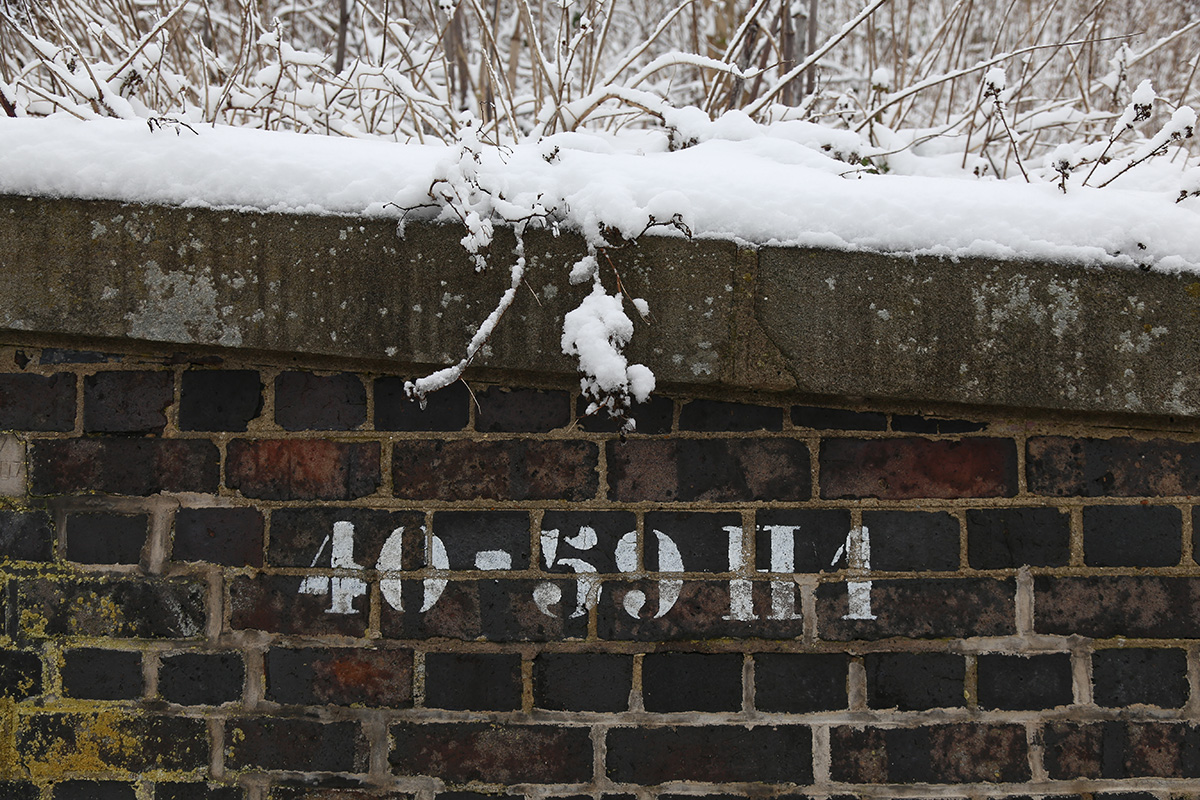
There are no nasty surprises regarding image quality. The 6D’s 20-megapixel full-frame sensor is new, but quality is hard to distinguish from the EOS 5D Mark III’s 22.3-megapixel output. Details are marginally lower, but so too are noise levels. Incidentally, detail and noise levels are very similar to the D600, too. Canon and Nikon each has its distinctive colour processing but there’s nothing much to separate these three cameras’ image quality on an objective basis.

1/320s, f/5.6, ISO 400, 400mm (click to enlarge)
1/60s, f/5, ISO 100, 32mm

1/125s, f/2.2, ISO 320, 50mm (click to enlarge)

1/200s, f/2.2, ISO 12800, 50mm (click to enlarge)
Their video modes are more varied. The 6D’s videos lag a little behind the D600’s for detail levels, and it lacks a headphone out to monitor the microphone input. However, unlike the D600, its aperture setting can be adjusted while recording. Overall, I’d class that as a draw, but both come a distant second to the Panasonic GH3 for video.

As with the D600, the 6D takes its design cues from a cropped-sensor sibling – in this case, the EOS 60D. The 6D is only fractionally larger and heavier than the 60D, although the lack of an integrated flash and articulated screen possibly account for the minimal weight gain. The layout of buttons is very similar, with a generous number of single-function buttons but a few less than on the 5D Mark III. It’s great to have the AF-ON button included – something Nikon chose to omit from the D600. The lack of direct access to white balance settings is disappointing, though.

Some people will lament the single SDXC slot, which compares unfavourably to the D600’s dual SDXC and the 5D Mark III’s SDXC and CompactFlash slots. I can live with a single slot, but it seems that this particular one hampers performance. Testing with an SDHC card rated at 94MB/s, burst mode set off at 4.2fps but slowed to 2.3fps after 26 frames. When I tested the 5D Mark III (which uses the same DIGIC 5+ processor), I found that the 6fps burst rate lasted indefinitely with a 90MB/s CompactFlash card but slowed to 2fps after 28 shots with a 94MB/s SDHC card.
Still, 4.2fps for 26 frames isn’t so bad. If you’re looking for a fast camera for sports or wildlife photography, you should be more wary of the 6D’s autofocus sensor.
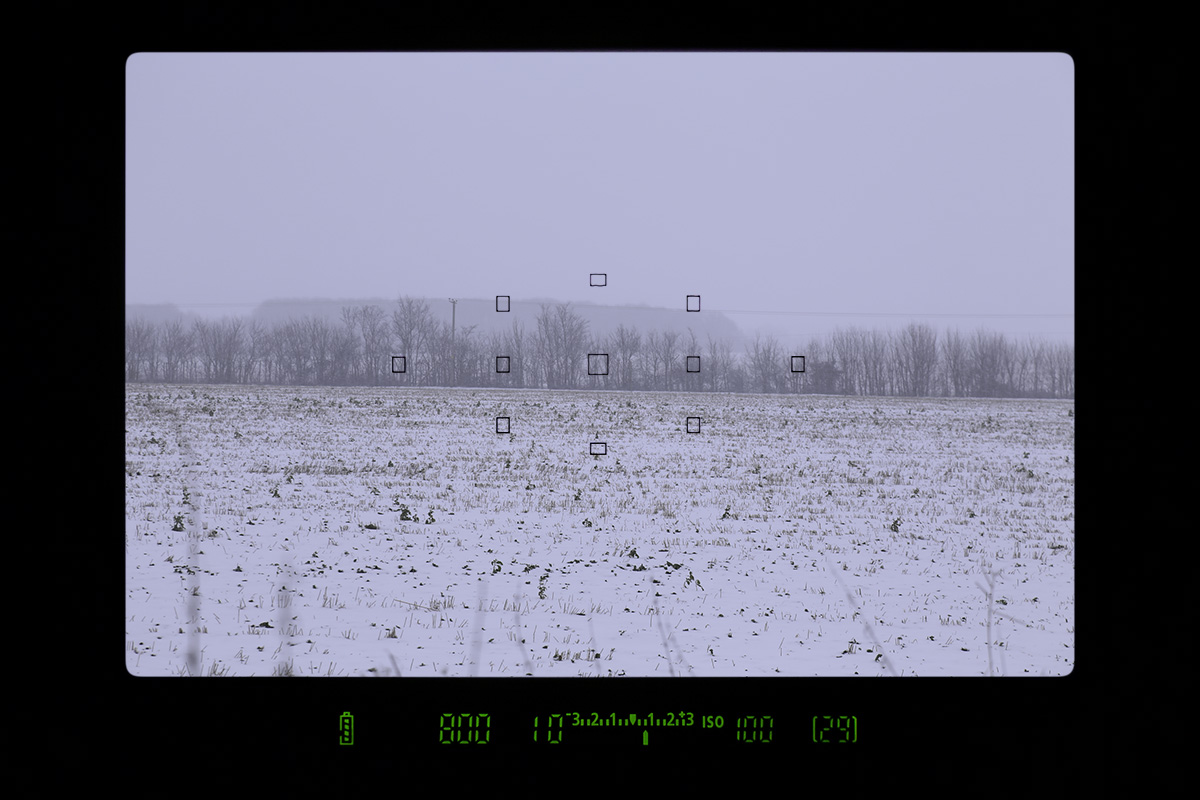
As with the Nikon D600, its points are bunched towards the centre of the frame – it’s as if Canon has taken an APS-C SLR’s autofocus sensor and plonked it into a full-frame camera. But whereas the D600 has 39 AF points, nine of which are cross-type, the 6D has a much simpler 11-point autofocus with just a single cross-type point in the centre. That rules out the automatic subject tracking that’s available in the D600 and 5D Mark III – there simply aren’t enough AF points to track moving subjects. It’s also a pretty big drawback for portrait work, where you want to be able to focus on the eye without having to focus and recompose the shot. Then again, the 5D Mark II had a nine-point autofocus system, and it sold by the bucket load.
So far, the D600 is coming out on top for features, but the 6D’s trump card is integrated Wi-Fi and GPS. GPS worked without a hitch in my tests. The GPS radio stays on when the camera is switched off, so it needn’t spend ages recalculating its position when you want to take a photo. An icon on the passive LCD screen reminds you to switch it off (via the menu) at the end of the day – shame there’s no hardware switch.
The Wi-Fi implementation is one of the most sophisticated I’ve seen. With the help of the EOS Remote app for iOS and Android, the camera can be remotely controlled from a smartphone or tablet, complete with live view, touchscreen control over the autofocus point and full access to exposure settings. Image browsing is well catered for too, with responsive full-screen previews, detailed EXIF data and the ability to apply star ratings. There’s no option to transfer photos to the app at the full 20-megapixel resolution, though.

The EOS Remote app running on an iPad
The 6D also supports wireless tethering to a PC or Mac, which worked flawlessly once I’d jumped through various hoops to set it up. There are various other features, such as uploads to Facebook and YouTube over a local network and the ability to stream slideshows to a Smart TV via DLNA.
Overall, the EOS 6D is a heady mix. Image quality is outstanding. Video capture has its limitations but picture quality is certainly flattering. Its controls and performance are decent enough, the autofocus is disappointing and the wireless features are spot on. That might sound like a fair compromise considering the breakthrough price, but it’s very much a case of taking the rough with the smooth. To me, the D600 feels more balanced.
As ever, we’d love to hear your thoughts. Are 11 autofocus points enough, or has Canon misjudged its market here? Bear in mind that Canon wants the 6D to appeal to people who are ready to move up from a cropped-sensor SLR – it’s not designed for potential 5D Mark III owners who are looking to save some cash. Are the Wi-Fi and GPS must-have features, tempting extras or a waste of space? And putting any allegiances to one side, which company do you feel has made the best cut-price full-frame camera?













I am still with Velvia, noit yet leapt to digits, patiently waited for whatever came close. Now we have 20MP, FF, powerful engines etc. So, does, in anybody’s opinion, the 6D, saturation+3, come close to velvia, but then again a light box/screen for slides is much brighter than the computor screen,.
As I have the zeiss 70-200 that can convvert to eos, I won”t be looking at Nikey.
As an amateur I upgraded from my 600D (Which was my first SLR in 20years – used to shoot with film when I was at school), I seriously considered the D600 but as I already had the 24-105 L and nifty fifty I decided on the Canon. I have to say I didn’t even get the after purchase guilt (What have I just done! Spending $2000 AUD on a camera body!!). The low light performance of this camera is awesome. I can take photos of my twin babies sleeping under very little light. I can shoot them at fast enough shutter to capture their erratic movements in low light conditions.
OK so it only has 11 AF points, the number of points is not the problem for me, it’s more how closely packed together they are and from what I could gather the 39 points on the D600 don’t cover any more area?
Being a gadget fan I also really enjoy the remote shooting capabilities although a little disappointed that they haven’t optimised the app for the iPhone5 screen size and don’t have a dedicated iPad app! Come on Canon….
I also considered the 5DIII but the jump in price wasn’t worth it for me for the extra AF points\Video performance\2 card slots.
who the hell uses AF anyways?
I bought the 6D last week to upgrade from the 50D I was used to. Of coarse it’s like night and day, the image quality is by far fantastic. I needed a good SLR for natural light photos and this produces them perfectly. I would recommend that you get the battery grip as I did, even the short zoom 24-105 is heavy and wants to nose dive the camera. You need the balance weight for sure. The wireless function with my smartphone worked without a hitch. I am glad I didn’t spend the additional $1000 on the 5D. If you are contemplating which one to get, base your decision on whether you will earn the cost back on your work. If you are not in it for earning a living then the 6D is the best choice.
Love my 6D! If you can’t take pics with 1 cross-type AF point, will having 100 points help you take better pictures? Geez, I bought the 6D for one thing – full frame image quality. I shoot everything even sports. Get over the griping of missing features and added-on features and just shoot.