


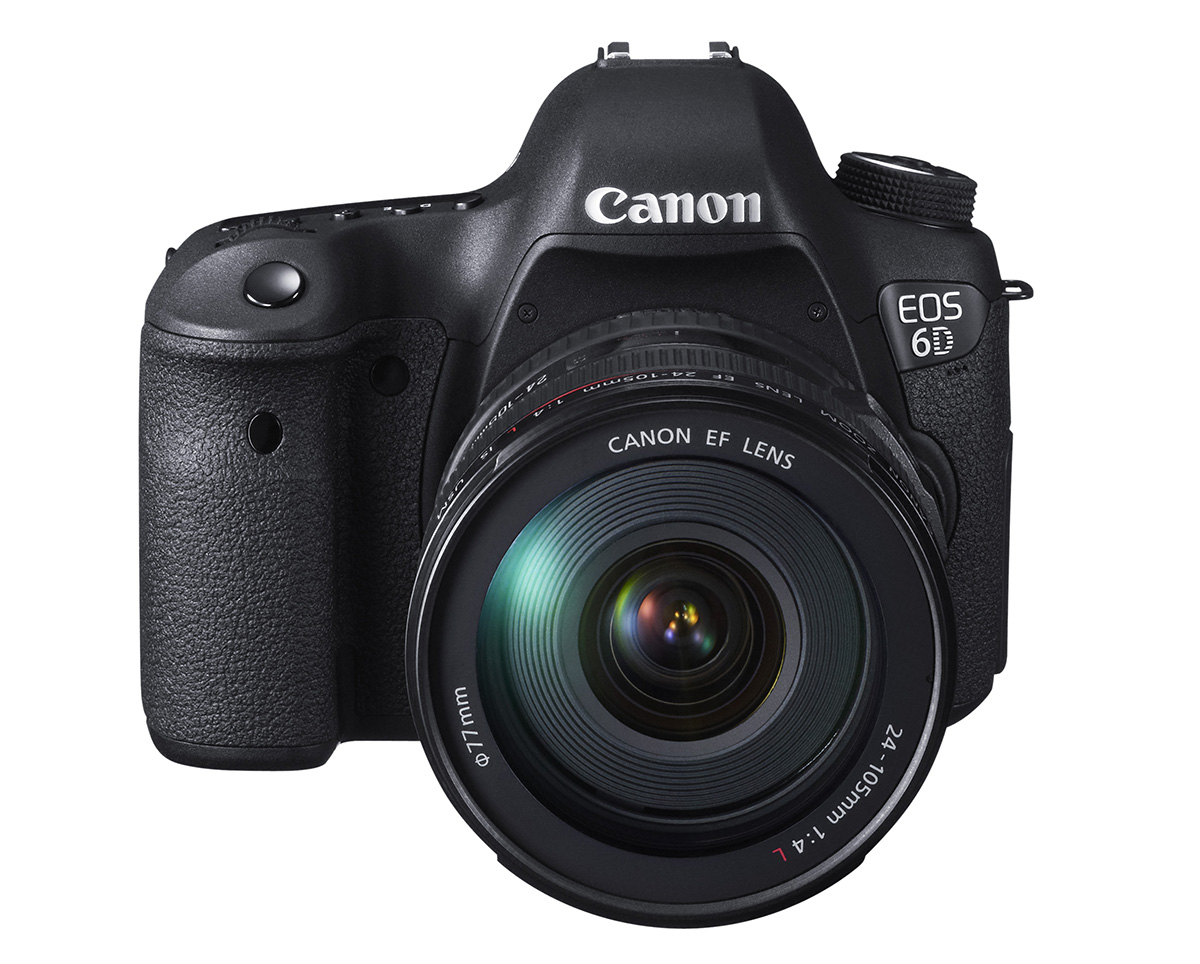
 It seems our exploratory swim in the waters of full-frame DSLRs is far from complete. With the ink from his recent reviews of the D600 and the mirrorless Panasonic GH3 still drying, I asked my homie Ben Pitt to put the Canon EOS 6D between his microscope plates and share his findings here. As you’d expect with a lower-priced semi-pro camera, the EOS 6D is a mixed-bag. It’s light and boasts integrated GPS + Wi-Fi, but a couple notable omissions are enough to yank this camera from the “obvious choice” list. Scrutinizing consumers have come to expect a catch with the $2,000 price point products. Does the EOS 6D have a big one? I’ll let Ben take it from here. – Chase
A year ago, a full-frame camera meant a professional camera. They were simply too expensive for the majority of amateur photography enthusiasts. But with the Nikon D600 and Canon EOS 6D, the landscape has changed.
Last month I wrote about the Nikon D600, and whether the inevitable compromises it makes compared to the pricier D800 are worth living with. I concluded that – for me at least – they were. Given the choice of a D800 or a D600 plus an extra $800 to spend on glass (or more realistically, household bills), I’d happily go for the latter.
This month, it’s time to ask the same question about the Canon EOS 6D.
There are no nasty surprises regarding image quality. The 6D’s 20-megapixel full-frame sensor is new, but quality is hard to distinguish from the EOS 5D Mark III’s 22.3-megapixel output. Details are marginally lower, but so too are noise levels. Incidentally, detail and noise levels are very similar to the D600, too. Canon and Nikon each has its distinctive colour processing but there’s nothing much to separate these three cameras’ image quality on an objective basis.

1/320s, f/5.6, ISO 400, 400mm (click to enlarge)
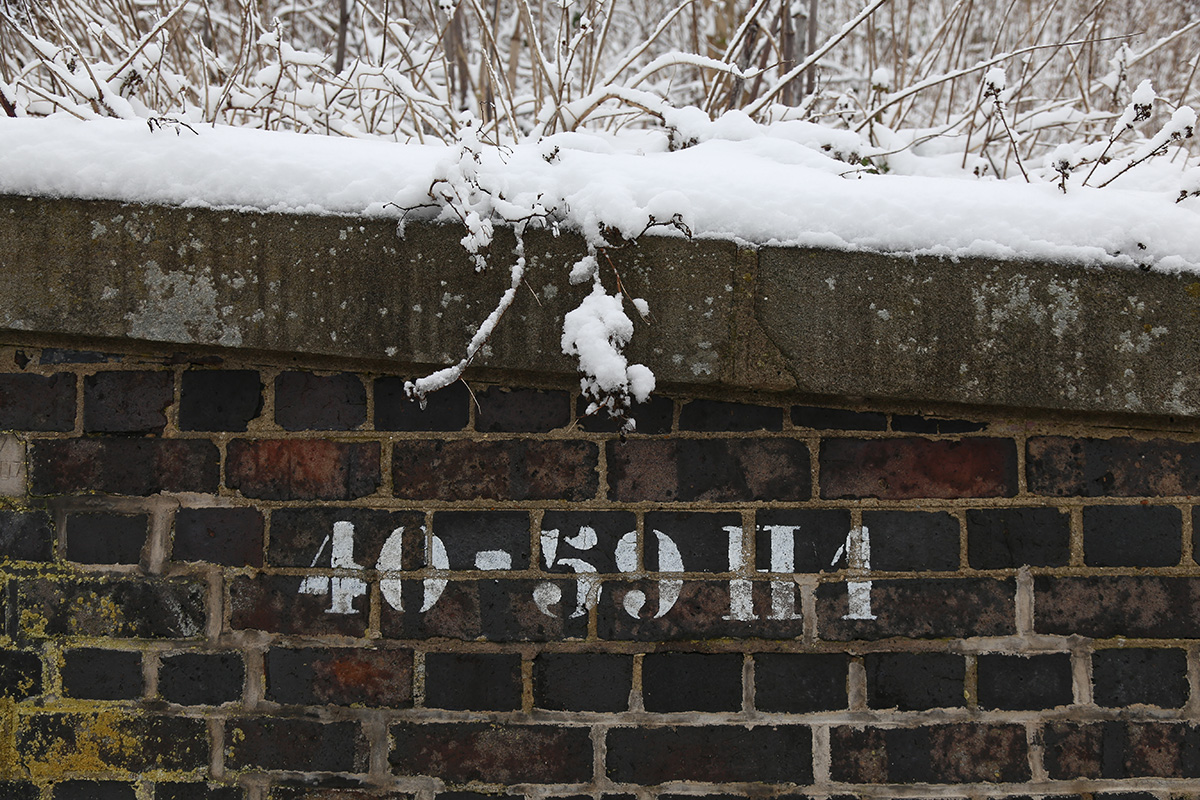
1/60s, f/5, ISO 100, 32mm

1/125s, f/2.2, ISO 320, 50mm (click to enlarge)

1/200s, f/2.2, ISO 12800, 50mm (click to enlarge)
Their video modes are more varied. The 6D’s videos lag a little behind the D600’s for detail levels, and it lacks a headphone out to monitor the microphone input. However, unlike the D600, its aperture setting can be adjusted while recording. Overall, I’d class that as a draw, but both come a distant second to the Panasonic GH3 for video.

As with the D600, the 6D takes its design cues from a cropped-sensor sibling – in this case, the EOS 60D. The 6D is only fractionally larger and heavier than the 60D, although the lack of an integrated flash and articulated screen possibly account for the minimal weight gain. The layout of buttons is very similar, with a generous number of single-function buttons but a few less than on the 5D Mark III. It’s great to have the AF-ON button included – something Nikon chose to omit from the D600. The lack of direct access to white balance settings is disappointing, though.

Some people will lament the single SDXC slot, which compares unfavourably to the D600’s dual SDXC and the 5D Mark III’s SDXC and CompactFlash slots. I can live with a single slot, but it seems that this particular one hampers performance. Testing with an SDHC card rated at 94MB/s, burst mode set off at 4.2fps but slowed to 2.3fps after 26 frames. When I tested the 5D Mark III (which uses the same DIGIC 5+ processor), I found that the 6fps burst rate lasted indefinitely with a 90MB/s CompactFlash card but slowed to 2fps after 28 shots with a 94MB/s SDHC card.
Still, 4.2fps for 26 frames isn’t so bad. If you’re looking for a fast camera for sports or wildlife photography, you should be more wary of the 6D’s autofocus sensor.
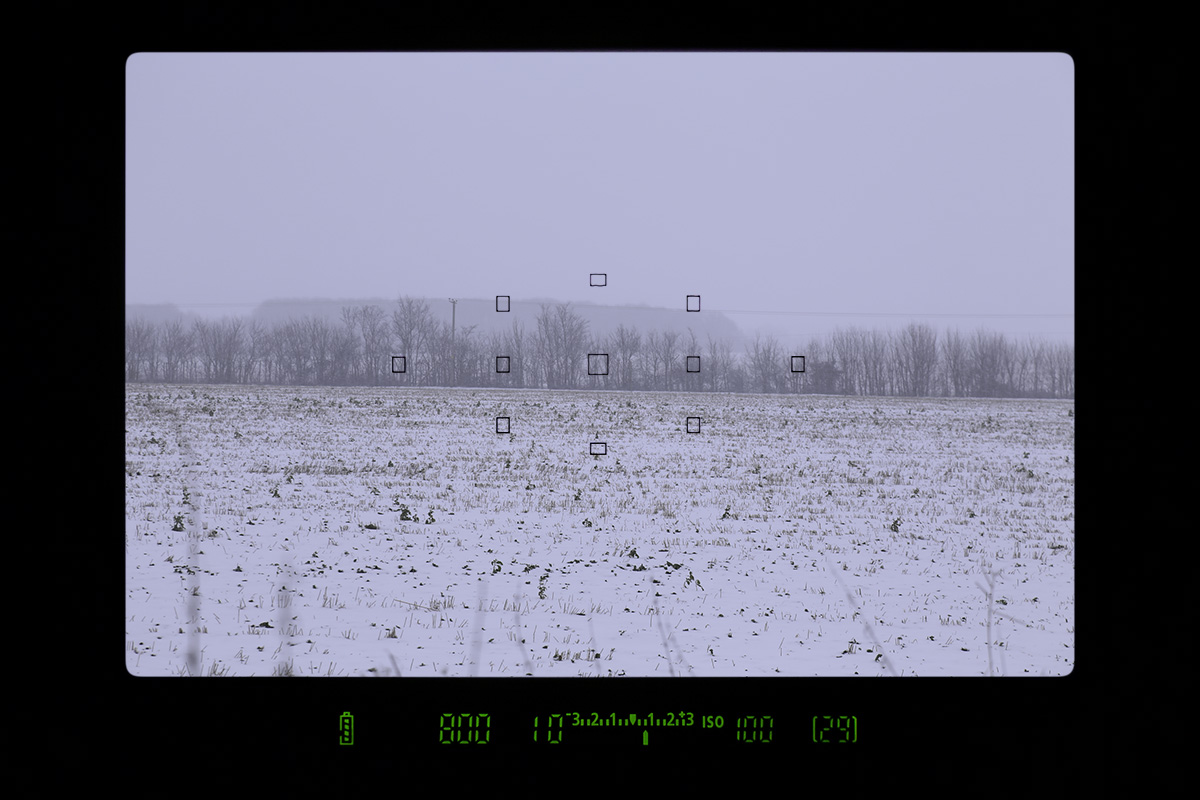
As with the Nikon D600, its points are bunched towards the centre of the frame – it’s as if Canon has taken an APS-C SLR’s autofocus sensor and plonked it into a full-frame camera. But whereas the D600 has 39 AF points, nine of which are cross-type, the 6D has a much simpler 11-point autofocus with just a single cross-type point in the centre. That rules out the automatic subject tracking that’s available in the D600 and 5D Mark III – there simply aren’t enough AF points to track moving subjects. It’s also a pretty big drawback for portrait work, where you want to be able to focus on the eye without having to focus and recompose the shot. Then again, the 5D Mark II had a nine-point autofocus system, and it sold by the bucket load.
So far, the D600 is coming out on top for features, but the 6D’s trump card is integrated Wi-Fi and GPS. GPS worked without a hitch in my tests. The GPS radio stays on when the camera is switched off, so it needn’t spend ages recalculating its position when you want to take a photo. An icon on the passive LCD screen reminds you to switch it off (via the menu) at the end of the day – shame there’s no hardware switch.
The Wi-Fi implementation is one of the most sophisticated I’ve seen. With the help of the EOS Remote app for iOS and Android, the camera can be remotely controlled from a smartphone or tablet, complete with live view, touchscreen control over the autofocus point and full access to exposure settings. Image browsing is well catered for too, with responsive full-screen previews, detailed EXIF data and the ability to apply star ratings. There’s no option to transfer photos to the app at the full 20-megapixel resolution, though.

The EOS Remote app running on an iPad
The 6D also supports wireless tethering to a PC or Mac, which worked flawlessly once I’d jumped through various hoops to set it up. There are various other features, such as uploads to Facebook and YouTube over a local network and the ability to stream slideshows to a Smart TV via DLNA.
Overall, the EOS 6D is a heady mix. Image quality is outstanding. Video capture has its limitations but picture quality is certainly flattering. Its controls and performance are decent enough, the autofocus is disappointing and the wireless features are spot on. That might sound like a fair compromise considering the breakthrough price, but it’s very much a case of taking the rough with the smooth. To me, the D600 feels more balanced.
As ever, we’d love to hear your thoughts. Are 11 autofocus points enough, or has Canon misjudged its market here? Bear in mind that Canon wants the 6D to appeal to people who are ready to move up from a cropped-sensor SLR – it’s not designed for potential 5D Mark III owners who are looking to save some cash. Are the Wi-Fi and GPS must-have features, tempting extras or a waste of space? And putting any allegiances to one side, which company do you feel has made the best cut-price full-frame camera?











I have a 40d and have been looking to upgrade. Q – would you buy the 6d when shooting is of fast action and in low low light (dance productions)?
Thanks for your help.
DW, can’t speak specifically to the 6D, but I’ve been shooting 5DMII for sports for several years. It works great for me, photos in magazines and on web sites, selling photos, etc. However, you have to have a different mentality to use this type of camera. I bought the 5DMII because of full frame, good high ISO performance and image quality. I’m conceited enough to think I could overcome the shortcomings.
I use centerpoint focus only, so as long as the center point autofocus is excellent, total number of focus points and number of cross hair is irrelevent. The center point has to work. I also believe using center point and cutting off the auto-select of focus points and other auto-focus features speeds up the autofocus. The camera uses valuable processing power jumping around to different focus points. Shooting this way, you HAVE to be able to lock your desired action into the center of your screen and track effectively. I prefer this, as it keeps the camera from locking onto a player that is not the desired subject (provided I do my job right.) BTW, 4.5 frames per second is pretty sweet, considering you have to nearly double the price to exceed that on any other full frame camera.
The frames per second is a different issue. You can’t start shooting a second before the anticipated action and expect to machine gun a good photo. You have to pick your spot and shoot on the action. I still follow through and take multi-frame sequences, but you have to time your photographs much more effectively.
The only things that concern me about the 6D are the max. 1/4000 shutter, the lack of synch capability for studio lights without purchasing additional equipment, and the relatively slow 1/160 maximum flash synching without going into high speed synch.
Haven’t decided for sure, but I’m leaning towards the 6D over the 5DMIII primarily because of price.
I have a 50D and its been a great camera. moving up to a d600 I loved the camera but the oil spots.. dust.. was something that spooked me into looking around more. I cant see the D800 and 5d mark iii. due to the price range. btw im not a pro just hobby and now doing some study to improve. I been playing around for years. 35mm days. Im looking at the 6D but thinking i should have stayed with the D600 hoping they will get this dust problem fixed. GPS not for me, WiFi is nice for android. after shooting a few thousand shots with the d600 my 50d just doesn’t do it 🙂
Im open to any comments and input on which would be better for me. due to you pros out there know far more than I.
I shoot for the local paper for the events page, so I shoot everything that happen here in this small city. I started with Nikon D7000, then 5D Mark ii and now the 6D, my lens are 24-105mm 4L, 80-200 2.8L and a 50mm. from proms, graduations, weddings, concerts, parties, to jockey, futbol, tenis games to press conferences,.everything else….etc, I don’t find anything that I miss from D7000, or 5D mark ii maybe the duo card? no, the 1/8000? no, 1/180 flash sync? no. I am not saying that this camera is for everybody. we have say that this camera has experimenting the latest technology, yes, I shoot and my imagen goes directly to my ipad or laptop in my messenger bag getting my pictures online faster than the other guys,and GPS showing almost the original place where the picture was taken,…. the local paper is super happy for that, lightweight, best center point focus that ever use, it can focus in pitch darkness without the flash assistent that bother people with that red light on their faces. super silent shooter, I enjoy taking pictures during symphony concerts now i am not afraid that i will interrupt the piano passages of a violin concerto. the ISO is fenomenal better that the Mark iii. I also love that it remembers the last focus point that I use vertically or horizontally. I can shoot this camera with one hand pretty much all the functions are in your right hand. and this without talking about the video features. great for interviews and latest news reporters. I can change aperture without getting out of live view, and it has good waterproof but not to take a shower with it…. so far this camera has served me well hope to see more technology in cameras in the future. What is coming up from future cameras? ….we will see. =)
I’ve had the Canon EOS 6D now for 5 months and I can say it’s my favourite camera I’ve had in a long time. The inbuilt GPS and Wifi come in so useful, I couldn’t imagine getting a DSLR without it.
Downside wise, the moiré you get in some shots can be painful, plus I’ve found the limitations on 30s shutter limit and sometimes very slow auto focus (compared to the 5D MK III) frustrating to say the least. Apart from the moiré patterning though, all these limitations can be bypassed by switching to manual so it’s not a big loss.
For an all-round full-frame camera, the 6D is worth every cent – even considering getting a second!
I would like to thank you for the efforts you’ve put in writing this web site. I am hoping the same high-grade web site post from you in the upcoming also.