


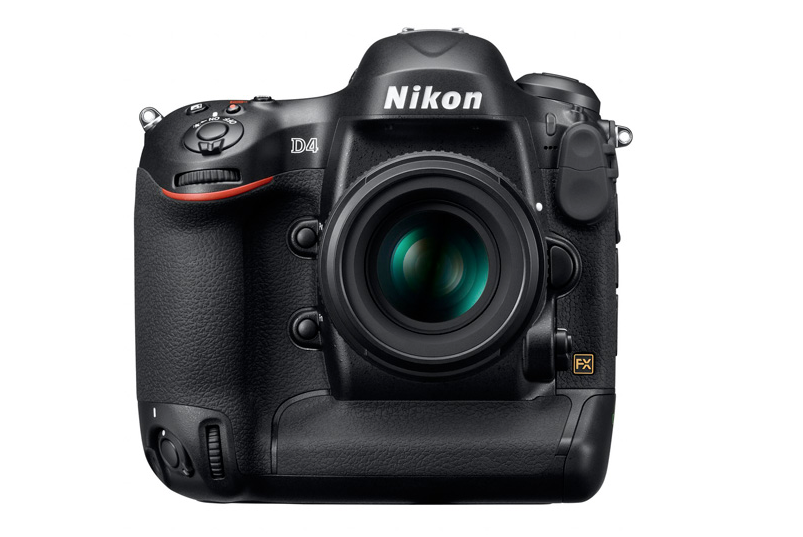
photo via Gizmodo
Here’s some highlighted specs:
_16.2 effective megapixel, full-frame sensor (16.6MP total)
_10fps shooting with AF and AE, 11fps with focus and exposure locked, 24fps 2.5MP grabs
_1080p30 HD video at up to 24Mbps with uncompressed video output
_91,000 pixel sensor for metering, white balance, flash exposure, face detection and active d-lighting
_ISO Range 100-12,800 (extendable from 50 – 204,800)
_MultiCAM 3500FX Autofocus sensor works in lower light and with smaller apertures
_Two sub-selector joystick/buttons for shooting orientation
_New EN-EL18 battery (21.6Wh capacity, CIPA-rated at 2600 shots)
_Twin card slots – one Compact Flash and one XQD
Please note I HAVE NOT touched one of these cameras, and NO I didn’t shoot the campaign. and I haven’t yet spent the appropriate time with the camera to tell you any gory details. I’m assuming I’ll be able to chat more soon.
So.. I (we) knew this was coming, but rather than me spouting off about having played with the system (I can’t), or telling you what your feelings about this system should be (I won’t), I’m turning the tables on you.
What’s your take? Love, hate, indifferent? Insights?
[Reminder that Nikon plays close attention to this blog, so your comments on this post – glowing or otherwise – might help inform Nikon about what your thinking.]Link to all the Nikon D4 details and/or purchase here via B&H.













Great product, no questions! 16MP is perfect, looking forward to see the ISO-performance (as I am wedding photographer, I need each and every ISO 😉
What I do not understand:
1.) why different (not as good as D3s) batteries? Just to earn more money with batteries and charger (both prices up by 50%!).
2.) why did they go for that strange AF-mode switch? this makes me slower on location!
3.) XQD? Good choice, maybe – but 1 QXD and 1 CF? Why not both? Now I need different cards and 2 readers?!
4.) is it true that AF-D is no longer supported? Seen a hint on the last page of the brochure, that only lenses with included motor are supported
As an event photographer I am REALLY excited about this camera. For me it means less on camera flash – more ambient. The high ISO is far more important to me than the pixel count. Yes, I accept I am paying a lot of money for the extra video functions that will never be used… but my job is to capture the natural atmosphere of the evening – this camera will get me 6 steps closer than my current D3.
Wow, this looks to be a really incredible update that refines on features that made the D3s such a great camera and really improves on some of the features that were lacking…especially video. I do wish that Nikon would provide some real innovation and develop a shutter that can have a max sync speed greater than 1/250 sec…(and I am not talking about the gimmicky way of doing it like Nikon is doing it with their strobes by firing them multiple times while the shutter is open)…I want real sync at speeds that will allow large apertures in broad daylight with full power flash.
with the rumors of the D800 being a hi megapixel camera… what will Nikon have as their “baby d4”? (much the way the d700 was to the D3.) Why not make the D300 replacement full frame and have spin off technology from the D4? this would place the D7000 as the top crop sensor and give Nikon 3 FF bodies in different price points….
NIce Body but i think it lil bit expensive comparing to its feature! but to Canon is the Best!
Unlike a lot of folks I’m assuming are reading this, I came to photos via video rather than the other way around. That being said, I like having a single camera for stills and video for corporate and doco work. I also do a bit on the narrative side. What excites me about this camera are some of the little things that make a big difference. Having manual audio adjustments AND and headphone output is huge. Dual audio is a pain when you’re doing a single run and gun. t makes me really nervous to not be able to have a confidence monitor if I’m going straight into the camera with something like a Rode Videomic (Canon are you listening? Apparently not…).
Other things like having good low light sensitivity is a big deal along with being able to have a clean output via HDMI. I also like the fact that I can choose to crop the sensor without losing resolution if I need more control on depth of field. Being able to use Nikon glass is also a plus in my book. I’m glad about the longer recording times, not a perfect solution but better than the 12 minute Canon limit.
Another really interesting feature is being able to both control and monitor remotely via http. Being able to use a MacBook or iPad as a directors monitor is a real problem solver. From a stills perspective, I have no doubts this camera will be better than I am but will give me something to grow into as my skills as a photog improve. As far as the new data cards are concerned, if they allow for faster download of movie files, then that will be be a real benefit on set or location.
What remains to be scene is how good the native codec is, how the sensor handles moire and how well the uncompressed video will hold up to color correction. Overall, given the current landscape of cameras, I think this could be a really cost effective tool moving forward.