


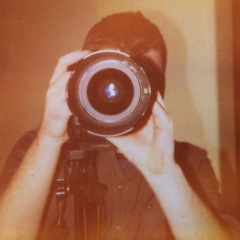
 Hey all, Erik here with a quick guest post about a subject that’s raised a lively debate in our studio. Everyone on our crew has long been shooting with Polaroids, rangefinders, micro 4/3 cameras adapted to accept vintage lenses…even processing digital images to look like they came out of an old dusty camera. Surveying the landscape, it’s clear this tide has been rising for a while now and we’re not the only ones attached to this stuff. So the question I present to you is this:
Why is retro or faux-retro photography so popular these days?
Why, when we have such capable and inexpensive cameras at our disposal, are we reverting to old technology and old aesthetics? Is it pure nostalgia? Is it a palette cleanser from the ease and accuracy of said capable and inexpensive cameras? Is it a passing trend? We have opinions–especially Chase does as you might expect–but we’d like to hear from you.











For me the answer to this is quite simple: Especially because we have those fancy digital cameras and everything that comes with it going back to the roots is so attractive! I know so many people (me included) that have experimented with digital cameras and workflows and came to a point where they asked themselves: “Hey ok, that’s cool, but what would photography be like without all those fancy toys and digital post production?”
For me that was and is the point I discovered my interest and growing love for Polaroids. For me shooting with a Polaroid is kind of “true” photography. Just shoot, get the picture and nothing else.
This isn’t to say that all the newer camera technology isn’t interesting or worse (it makes life a whole lot easier and is just as fun, just in a completely different way), but to point out that Retro will always be there – and that’s damn good!
Soft-focus, white hazy vignettes were the rage once too… in 1985.
They look kinda dated now, don’t they?
“Vintage” looks on someone’s photos, especially for wedding and portrait work is a disservice to the client. When they look back in 20 years at their wedding album, they’ll wonder WTF their photographer was thinking.
http://www.mangored.com
1. Because women think it looks neat
2. Because it’s easy to do with thousands of plugins available for free.
3. Because you can be an AMWAC and totally screw up your picture and it will look fine.
4. Because what people find attractive is proportionate to what was popular when they were young. I’m in my 40’s. AMWAC’s are hearkening back to their childhood and polaroids and cross processed images and it makes them feel young again. Black and white was HUGE when I was in my 20’s because those in their late 30’s early 40’s grew up with b&w.
It adds back what I loved about film (warmth, richness, feeling) without what I hated about film (expense, eye strain, toxic chemicals).
I suppose it’s not anything I wouldn’t try and do normally in post. It’s just even easier to do now. I think its popularity is definitely very high right now and probably getting a bit overused but I just feel like it is part of the normal creative process.
If there photo is not there though, no amount of analog effects will help though.
I think it’s partly because what I’m creating is more than one & zero’s— it’s a translation process that’s more than what any camera outputs. It’s about what and how I’m seeing more than what is there. I use retro hardware and software for the same reason I use black and white- because it allows me and my viewers to more accurately see what I’m creating. Visual Palette cleansing is important- it’s why a really good cab tastes better after a really good petite syrah. Retro creates a tasty distinction, a frame of reference in the visual palette that draws a viewer into the subject.
If I wanted to wax philosophical, I might suggest going retro has the same appeal to a sense of history and culture we get when we head out to look at ‘old’ established/historical buildings/neighborhoods/villages. It gives us a historical frame of reference- some roots for our craft as we are reminded of the Glory days of photography. One might suggest that with a global future that seems so shaky, we are searching for a foundation to lock ourselves into- that’s the blessing of history- it gives us just such a foundation.
The power and free-spirit of the snapshot is part of that, where the art was made accessible to the masses who had no frame of reference for composition, lighting, exposure, f-stop, bracketing etc. The ease of use of a Polaroid transcends the complexities and distractions of pro photography.