



One of the most common questions we hear from all of you is, “What is your everyday kit?” Our digital cinema guru, Erik, wanted to take a minute to chat gear with you and answer that question from his perspective. Please give him another warm welcome… This post is another installment of a series that our staff is doing about the gear that we consider essential for our work…the stuff we don’t leave home without. -Chase
Thanks Chase. As I sit here on my couch writing this blog post, I’m surrounded by no less than 22 cameras in my living room alone. Some are decorations, some are used on occasion, some are only used for video shoots, and one gets used every. damn. day. I’m a collector [read: junkie] and I can’t get enough cameras, so when one becomes a regular fixture of my daily creative arsenal, it’s worth taking a moment to recognize its greatness. Right now that camera is the Olympus OMD E-M5. I picked mine up last may, and have since taken it around the world and shot the hell out of it. My kit consists of the E-M5 camera body, an Olympus 14-150mm f/4-5.6 lens and a Panasonic 20mm f/1.7 lens, all wrapped up in a Think Tank Retrospective 30 shoulder bag. It’s a simple setup, but it’s yielded results good enough for me to keep bringing it out of the house while my bigass DSLR kit stays on the shelf.
There’s a lot to love about the E-M5. It’s weather sealed, it’s got a slick retro design, and the image stabilization is like nothing I’ve ever seen before. But for me, the camera really shines in two categories: speed, and low light capability. Everything about this camera is fast, from the startup time to the autofocus to the frames per second it can fire. Even the layout of the buttons and dials make for a brisk shooting pace. In regards to low light, the image quality holds up quite nicely at high ISO’s. I don’t like to use a flash, so this is a huge bonus for me. ISO 3200 on the E-M5 looks like ISO 1000 on my Canon 7D, it’s crazy, and everything shot at ISO 1000 or lower looks the same, so grain and noise are rarely a concern. Throw the cameras insane 5 axis image stabilization into the mix [which allows for shooting at slower shutter speeds] and you can shoot in the dark with results like this [click to enlarge]:
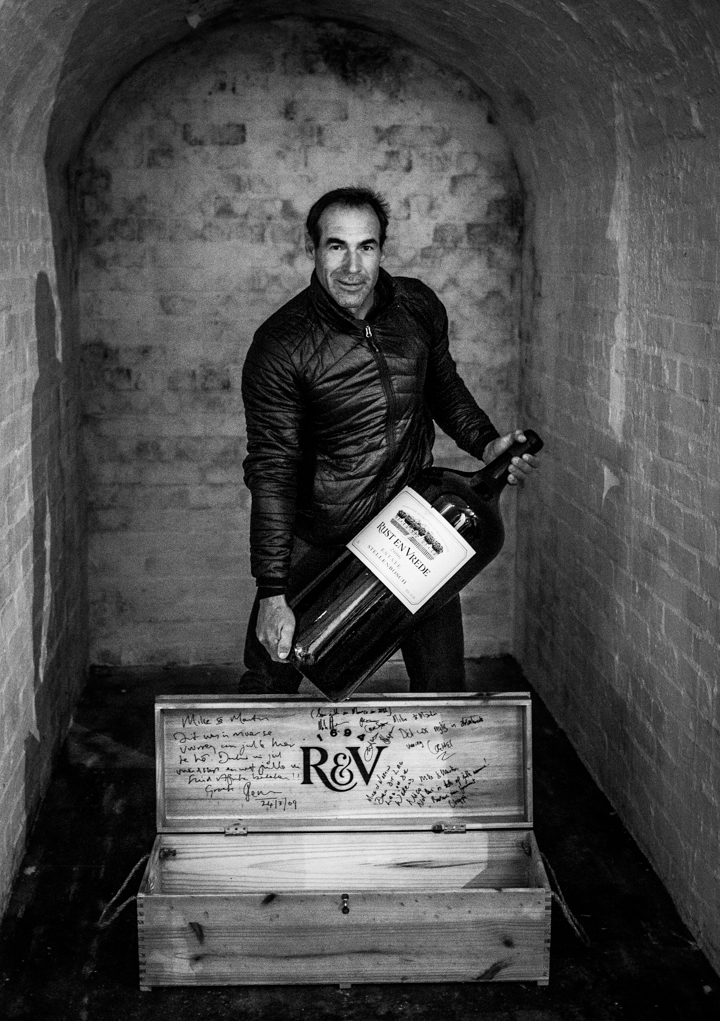
This picture was shot at ISO 3200, f/1.7 at 1/13th of a second. If you can't do the photo math on that, trust me, it was dark.
Now let’s talk lenses. Keeping my kit lightweight is important to me, so I’ve paired it down to just two lenses; the 14-150mm zoom, and the 20mm pancake lens. The zoom lens keeps me covered for just about everything I want to shoot as long as there’s enough light. With the 2x crop factor on the E-M5’s sensor, it’s effective focal length is 28-300mm. That’s some range. Check out these shots from our recent trip to Villefranche for an example. They’re shot from the same spot using the same lens zoomed all the way out on the left, and all the way in on the right.

The only drawback to this lens is that its aperture is a little “slow”. The widest aperture on the lens is f/4, and f/5.6 when zoomed to 150mm. While that’s fine and good for bright landscapes, it doesn’t lend itself well for indoor or night photography. This is when I switch to the Panasonic 20mm f/1.7 pancake lens. This was the first lens I picked up when I started using a micro four thirds camera 2 years ago [the Panasonic GF1], and it might be my favorite lens of all time. It’s super sharp, it’s tiny, and it can see in the dark [as shown in the above photo of Mike Horn holding the giant wine bottle]. Its focal length is a sweet spot in my opinion. At 20mm, or 40mm equivalent with the crop factor, you can take a few steps closer to your subject and take a portrait with no weird lens distortion, or take a few steps back and get a wide shot with no lens compression. Here’s a portrait of Norton looking like a baller on Fancy Friday, shot with the 20mm:

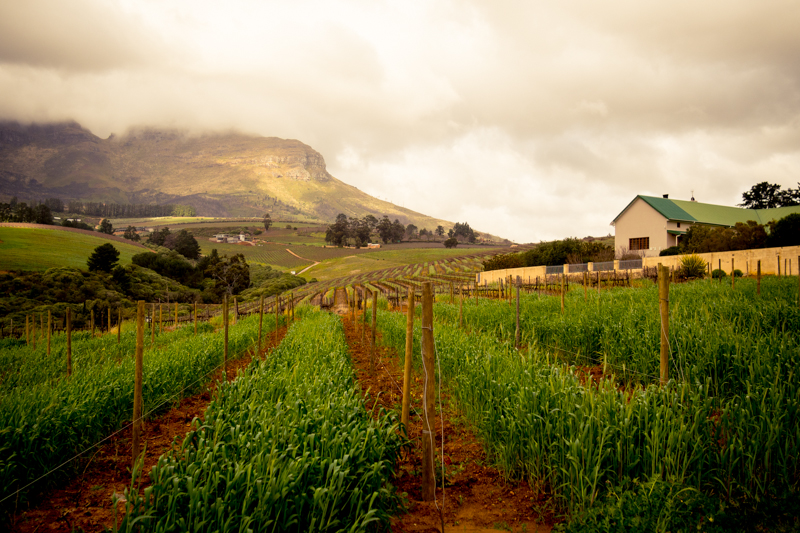
And here’s a landscape from the Guardian Peak Winery in Stellenbosch South Africa, also shot with the 20mm:
The final component of this camera kit that I think is worth mentioning is the oh-so-classy Think Tank Retrospective 30 shoulder bag. Think Tank nailed the design of this bag with one simple characteristic that ALL other camera bag manufacturers need to take note of; it doesn’t look like a camera bag. There are no bigass logos anywhere to found, no hideous bright green interior, no giant awkward straps for securing tripods or trekking poles or whatever else you wanna weigh yourself down with. This bag looks like something your cool grandpa handed down to you after he retired from chasing his secretary around. The bag is smart too. I love the deployable “Sound Silencers” that cover up the velcro so you’re not the noisy photographer swapping gear in and out of their bag. The Retrospective 30 is my preference since it holds my camera body, lenses, batteries, and the occasional iPad with room to spare, but they make them in a wide variety of shapes and sizes, so check out their website to see if they have what’s right for you.

I hope you found something useful from this minimalist approach to photography. If you’d like to try any of this photo gear out, it’s all available to rent from BorrowLenses.com. Feel free to tell us about your walkaround kit in the comments section and, as always, keep snapping.












nice set. I use Kelly Moore camera bags. The one thing I look for in a camera bag is that it does NOT look anything like a camera bag!
Thanks, Erik. How would you feel about using this camera on the ski slopes? I have a trip for fun coming up to Whistler and would love to avoid lugging around my D4, but still want high quality landscape and action images.
I think it’d be great for skiing.
Agree! Agree! Agree! Few likely realize how useful a 20mm is. It’s incredible – anything indoors, especially tight crowds, intimate vignettes, etc. My (very) former kit was a Nikon F4, 20mm, 24-70/2.8 – used the amazingly sharp 180mm/2.8 for occasionaly portraiture, an 80-200/2.8 for concerts. Let’s not forget – in the days before stabilization, a Bogen automatic monopod was a lifesaver – think 200mm @ 1/30 sec. Probably still very useful.
p.s. The monopod will get you in the door at many venues where tripods are verboten. And with the little extendable tripody-like brace, just as effective (wonderful at floor level).
My thoughts exactly, traded up from a D7000, filled a Temba mini satchel and haven’t looked back. Absolutely loving mine.
I have the Fuji X-E1 with kit zoom lens. I almost bought the Olympus, but wanted a bigger sensor. Olympus is a lovely camera, but I’m not into the 4/3rd sensor size. The lenses are nice though. Nowadays, I can put an adapter on my Fuji X-E1 or Sony NEX 5 and shoot Leica lenses, Canon or Nikon, Minolta, Olympus and more; using the peak focus on the cameras. I say go to the camera shop and try them all out. The Olympus has a faster AF than the Fuji or Sony, but the sensor is decidedly smaller. If that doesn’t matter, then go for it. I guess it all depends on if you’re blowing up the files into huge prints too. Me, I’d like that option. It all comes down to what camera you will carry everyday. So far, my iPhone wins that category. (I’m getting lazier in my old age. LOL!)
Thom Hogan on his Sans Mirror website says the EM-5 sensor outperforms the Fuji X sensors — he says the only area the Fuji sensor can beat the E-M5 is in B&W. And he also says the rest of the camera outperforms the Fuji handily. And the lenses available are equal or better in quality, and far better in choice. Then there is the IS and — it’s a slam dunk. He says you would only pick the Fuji if you like its looks, and you are a niche specialist B&W photographer.