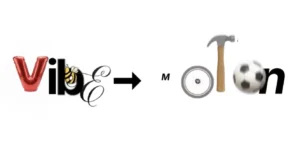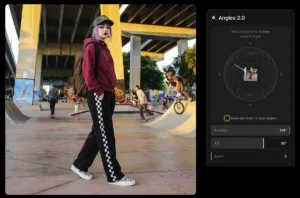
You are seeing the name everywhere. Nano Banana has rapidly become the shorthand for high-end AI image generation and editing, specifically the models powering Google’s latest Gemini updates. If you work in photography, design, or illustration, you cannot ignore tools that promise to speed up your workflow by 10x.
But you also know that subscription fatigue is real. Every tool wants $20, $50, or $100 a month. As a creative professional, you have to treat your software stack like a business investment. Does this tool put money back in your pocket, or is it just another line item draining your overhead?
We are going to look specifically at Nano Banana pricing, the differences between the free and paid tiers, and—most importantly—how to determine if upgrading will actually advance your career.
What Actually Is Nano Banana?
Before we talk numbers, let’s define exactly what you are paying for. “Nano Banana” is the community and industry code name for Google’s Gemini 2.5 Flash Image and Gemini 3 Pro Image models. It is not just a “make me a picture” button; it is an image editing and reasoning engine.
Unlike older generation models that just hallucinate pixels based on a prompt, Nano Banana (specifically the Pro version) understands context. It can read a style guide, maintain character consistency across multiple shots, and render accurate text within an image.
There are two main versions you will encounter:
- Nano Banana (Standard): Fast, lightweight, checks the box. Good for quick ideation.
- Nano Banana Pro: The “Thinking” model. It uses more processing power to reason through complex requests, like “product shot of X but with the lighting from Y and the background of Z.”
The Real Cost of Nano Banana
Pricing for AI tools is rarely straightforward. With Nano Banana, you generally have three ways to access it, and each has a different price tag and value proposition for a working pro.
The Free Tier
You can access the base Nano Banana model for free through the standard Gemini interface.
- Cost: $0
- Limits: Daily generation caps (usually around 3-5 high-quality generations), slower processing speeds, and mandatory watermarking (SynthID).
- Use Case: This is for testing. Do not try to run a client workflow on the free tier. The usage caps will hit you exactly when you are on a deadline, and the lack of high-res export makes the outputs unusable for final print or high-end web work.
The Subscription Model (Google One AI Premium)
For most freelancers and solo creatives, this is the standard entry point. Access to “Nano Banana Pro” (Gemini 3 Pro Image) is usually bundled into the Google One AI Premium plan.
- Cost: $19.99 / month (prices vary by region, but this is the standard US benchmark).
- What you get: Priority access to the Pro model, higher resolution outputs (often up to 4K), and integration into Google Workspace apps.
- Hidden Value: This often includes storage (2TB) and access to the advanced LLM for text work (copywriting, email drafting), not just images.

The API and Credit Model
If you are a creative technologist or running a small agency, you might access Nano Banana via the API (Vertex AI) or through third-party “wrapper” tools like Kie.ai or Promptus.
- Cost: Pay-per-image.
- Nano Banana Standard: ~$0.02 per image.
- Nano Banana Pro: ~$0.12 – $0.24 per image (depending on resolution and “thinking” tokens).
- Why do this? If you are batch-processing 500 images for a catalog, paying $0.02 per image via API is often cheaper and faster than a monthly subscription that limits how fast you can click “generate.”
Analyzing The ROI For Creative Pros
The keyword here is Nano Banana pricing, but the concept is Return on Investment (ROI). Spending $20/month is negligible if it saves you five hours of billable time. It is expensive if it just sits there unused.
When To Stay Free
If you are a photographer who shoots exclusively on analog or a purely documentary filmmaker, you likely do not need Nano Banana Pro.
Use the free tier if:
- You only use AI for mood boarding or rough concepts to show a client before the actual shoot.
- You are learning prompt engineering and strictly experimenting.
- Your deliverables are 100% human-created and you have ethical or stylistic boundaries against using AI assets in final work.
When To Pay The Full Rate
This goes back to a core career philosophy: Full rate or free. If you are doing professional work, use professional tools. The “middle” is where you get stuck—using a free tool that creates low-res, watermarked images that you then have to spend three hours fixing in Photoshop. That is not saving money; that is wasting time.
Pay for the subscription (or API credits) if:
1. You Need Character Consistency
The Pro model excels at keeping a subject looks the same across ten different images. If you are pitching a storyboard or a character concept to a Director, the Pro model pays for itself by not making your hero look like a different person in every frame.
2. You Need Text Rendering
Nano Banana Pro is one of the few models that can handle text inside an image correctly. If you are a graphic designer mocking up posters or packaging, the ability to generate a “bottle of soda with a label that says ‘Summer Vibes'” without the text looking like alien hieroglyphics is a massive time-saver.
3. Client-Ready Resolution
The free tier output is often 1024×1024 or 2K. The Pro tier (via API or Premium) unlocks 4K resolution. If you are delivering assets for web headers or print mocked-ups, 2K does not cut it. Upscaling adds artifacts. Native 4K from the model is cleaner.
Workflow Integration: Getting Your Money’s Worth
If you buy the subscription, you need to integrate it deep into your workflow to justify the Nanobanana pricing. Here is how successful pros are actually using it.
The “Prompt to Edit” Workflow
Do not just generate images from scratch. The real power of Nano Banana is editing existing assets.
- Step 1: Upload your raw photo or a rough sketch.
- Step 2: Use the “Prompt to Edit” feature. Select a region (like a shirt, a background, or a prop).
- Step 3: Use natural language. “Change the gray shirt to a red silk textures, creating realistic folds.”
- Why it pays off: This replaces hours of searching for stock assets and warp-tooling them in Photoshop. You keep the lighting and perspective of your original shot but change the details instantly.
The Bulk Variation Technique
If you use the API or a credit-based wrapper, you can run batch variations.
- Scenario: A client wants to see “options” for a product background.
- Action: Script a loop that sends your product shot to Nano Banana Pro with 20 different background prompts (Beach, Studio, Urban, Forest, etc.).
- Cost: At ~$0.12 per image, 20 variations cost you $2.40.
- Value: You deliver 20 high-fidelity options to your client in 10 minutes. This makes you look incredible and allows you to charge a premium for “creative direction” rather than manual retouching labor.
Comparison: Nano Banana vs. The Competition
You need to know how this pricing stacks up against the other giants in the room.
vs. Midjourney
- Midjourney: ~$10 – $60 / month.
- Comparison: Midjourney is often more “artistic” and stylized. Nano Banana (Gemini) is often more “obedient” and photorealistic for commercial edits. Midjourney is a painting tool; Nano Banana is a photographer’s assistant. If you need precise edits to a specific part of an image, Nano Banana wins.
vs. Meta AI
- Meta AI: Free (currently).
- Comparison: While often positioned as a free alternative, Meta AI’s quality and controllability are generally considered a step behind both Midjourney and Nano Banana Pro for professional uses. It’s a great tool for quick social media content, but for client work requiring high resolution and specific edits, dedicated pro tools are a better investment.
vs. Adobe Firefly (Integrated)
- Firefly: Included in Creative Cloud (generative credits).
- Relationship: Interestingly, Adobe has begun integrating third-party models. You might see “Gemini” or “Nano Banana” options appearing inside Firefly or Photoshop interfaces.
- Pricing Impact: If you already pay for clean Adobe CC, check if you have access to these models via your credits before buying a separate Google One subscription. However, the standalone Nano Banana Pro model often has less strict “safety” guardrails regarding creative styles than the commercially-safe-only Firefly base model.
The Pitfalls of Cheap AI
There is a tendency to look for the cheapest possible credit deal. You will find random websites offering “Unlimited Nano Banana Generations for $5!”
Avoid these.
These are often “reverse proxy” sites that use low-priority API keys.
- The Risk: Your prompt data is not secure.
- The Quality: They often silently downgrade you to the “Standard” model even if they claim it is “Pro.”
- The Reliability: They disappear overnight.
If your career depends on delivering files, rely on the official source (Google) or enterprise-grade API providers (like Kie.ai). Do not build a professional workflow on a sketchy $5 tool.
Technical Requirements for the Pro Tier
While Nano Banana runs in the cloud, your ability to manage the assets depends on your creative hardware.
- Display: You are paying for high-res, accurate textures. You need a 100% sRGB or AdobeRGB calibrated monitor to see if the AI messed up the color grading.
- Internet: The Pro model often returns heavy file sizes, especially if you are batch generating. A fiber connection is standard for this workflow.
Conclusion
Is the Nano Banana pricing model worth it for you?
If you are a hobbyist, stay on the free tier. The limits frame your practice and force you to be deliberate.
But if you are a Creative Professional – if you bill clients, if you have deadlines, if your reputation relies on quality—the $20/month or the API usage costs for the Pro tier are an investment, not an expense.
The ability to reason through complex visual problems, maintain consistency, and render text separates Nano Banana Pro from the toys. It allows you to say “Yes” to projects that would have previously required a team of three retouchers.
Don’t accept “the middle” of using free, watermarked, low-res tools for paid client work. That is amateur hour. If the tool adds value, pay the full rate for it, and then charge your clients accordingly for the superior speed and quality you deliver.
Build it into your rate. Close the deal. Create the work.
PS – Recommended Settings for Pro Output
To ensure you are getting the value you pay for, verify these settings in your interface:
- Model Selection: Ensure “Gemini 3 Pro” or “Nano Banana Pro” is selected in the dropdown. Do not leave it on “Auto.”
- Aspect Ratio: Set this before prompting. Cropping an AI image later loses pixel density.
- Output Format: If available via API, always request PNG or TIFF. Avoid JPEG compression on generation if possible to maintain grading flexibility.
Master the pricing structure, but more importantly, master the tool.
PPS – More on Nano Banana Pro:
- How to repose a model
- How to do style transfer in Nano Banana
- Nano Banana FAQs
- Does JSON prompting work?
- How to master Nano Banana prompting
- Nano Banana vs ChatGPT Image 1.5
- How to use Midjourney with Nano Banana Pro
- Remove the Nano Banana watermark
- Set up a virtual product shoot with Nano Banana
- Create a VHS effect
- Add texture to a logo