

Hey friends, Chase here.
Every summer, I revisit conversations from the archive that have stood the test of time. Not because I’m nostalgic, but because the best ideas don’t expire. They deepen.
This is another installment of Summer School—episodes I return to when I’m stuck. When a pattern I’ve been conditioned to see suddenly needs to be broken, I go back to the people who help me think differently.
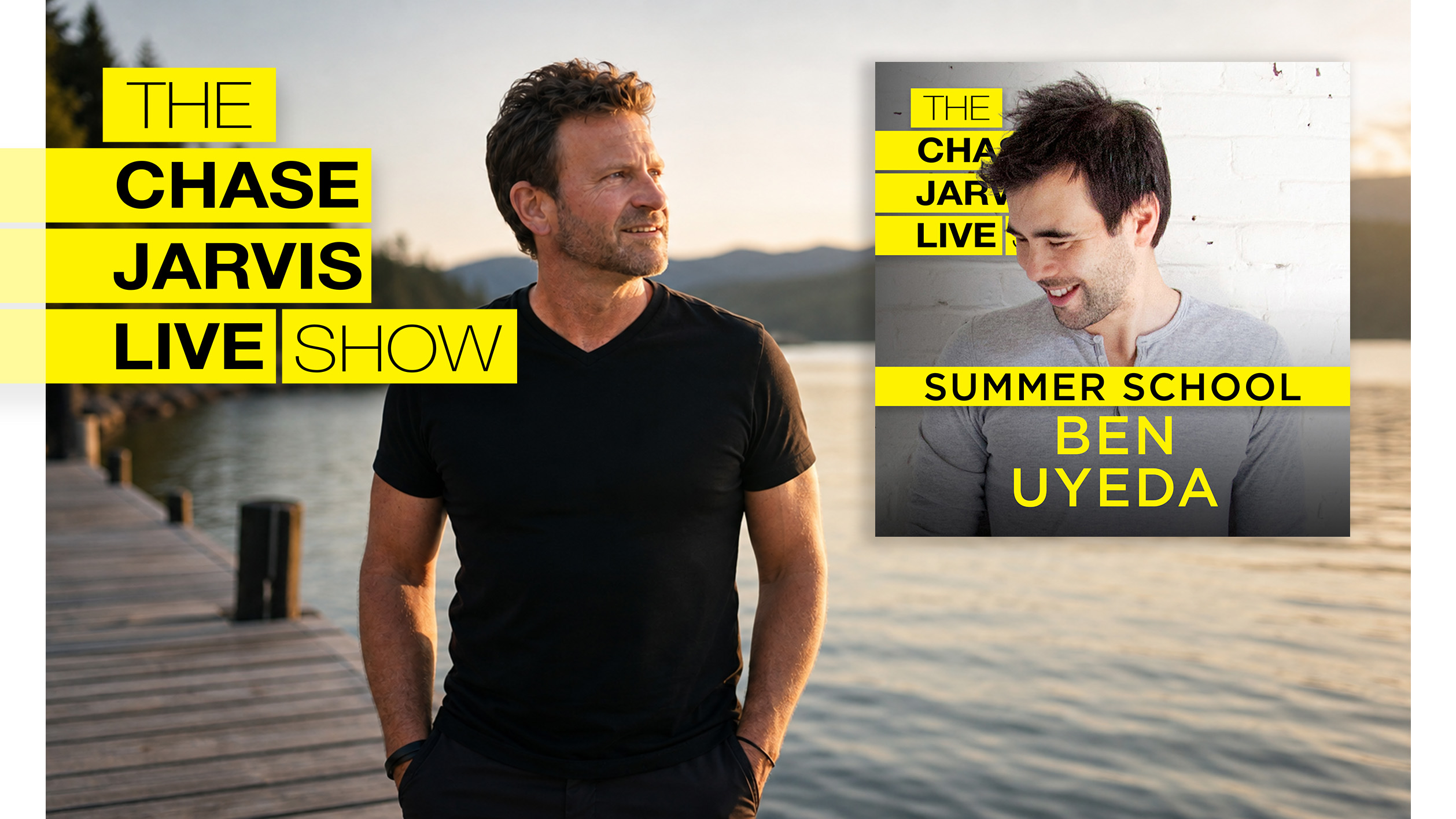
This one with Ben Uyeda is near the top of that list.
Ben is a designer, entrepreneur, and creative force of nature who left a successful architecture firm and an Ivy League teaching gig to bring high-design ideas to the masses through media. His designs—widely shared, often free—have reached tens of millions of people and are being built around the world. And his most recent project? A 65-room hotel on 180 acres in the California desert, adjacent to Joshua Tree National Park, built with a team but rooted in the same hands-on curiosity that started with a concrete vase on YouTube.
When this episode first aired, I called it one of the most shocking conversations of the year—not because Ben tried to shock anyone, but because I didn’t expect it to blow me away. It did. It still does.
His superpower is orthogonal thinking. Where most of us see the world through the patterns we’ve been trained into, Ben keeps asking the next question—about scale, purpose, risk, money, mastery, and what creatives actually want when they say they want “more.”
This conversation changed how I think about career growth. I think it can change yours too.
“Forget scaling. What I think is really intriguing is this idea of escalation.” — Ben Uyeda
🎧 Listen to the Episode Right Here:
Summer School: Ben Uyeda on Escalation, Purpose, and Building Bigger Without Losing Yourself
Ask Ben how he describes what he does, and he keeps it almost stubbornly simple: he designs things and he makes them. Those things range from a small concrete vase to a dining table to homes—and all the way up to Reset Hotel: 65 rooms on 180 acres near Joshua Tree.
The leap sounds impossible until you understand his model.
Most creatives, Ben argues, get trapped in a false choice. Either you’re the solo maker—writing the book, building the table, running the photo shoot—or you’re the manager of something massive, taking in everyone’s opinions and slowly losing contact with the craft. He thinks the more interesting path sits between them: escalate.
Scaling is repeating one thing at higher volume for better margins. Escalation is using each project as practice for a bigger adventure—vase to furniture to staircase to house to hotel—with new skills, collaborators, and risk at every step.
There is no clean line from designing a vase to building a hotel. But there are incremental steps. In Ben’s case, roughly five years from vase to house. Another five from house to hotel. Each jump maybe 50x to 100x in scale. The next project isn’t the destination. It’s skill-building—and an opportunity to meet the people you’ll need when the economic risk gets larger.
That distinction is the heart of this episode. And if you’ve ever chased “scale” when what you really wanted was growth, challenge, grit, relationships, and a life that still feels like yours, this one will hit hard.
What You’ll Hear in This Episode
- How Ben describes his work—from concrete vases to a desert hotel, and why he focuses on the doing
- Why small creative projects feel like Zen practice—and why bigger ones require learning to pass the ball
- The tension every creator knows: curiosity and economic safety often feel like they’re pulling in opposite directions
- Scaling vs. escalating—and why most creatives think they want scale when they actually want challenge, skill, and connection
- The paperclip-to-house Craigslist story as a model for adventurous creative careers
- Why nature is becoming a luxury good—and how that thesis shaped Reset Hotel
- Ben’s multi-year process for building a point of view: observations, post-its, journaling, and knowing when you’re secure enough to ask bigger questions
- How to borrow pattern recognition from outside your field (Ben’s favorite: food)
- What AI changes—and what it doesn’t: reputation, responsibility, and embracing creative fear instead of waiting until you feel safe
- The story of Reset Hotel, Industry Night for creatives, and why physical immersion may be the next horizon
Scale vs. Escalate
This is the idea I keep coming back to—and the one that originally made this episode unforgettable.
Typical entrepreneurial advice says: find a minimum viable product, then scale. For creatives, Ben says, that model often fails. Scaling optimizes for volume, repetition, and efficiency. Escalation optimizes for adventure: trade the paperclip for the lighter, the lighter for something bigger, and keep going—not by doing the same trade forever, but by graduating the game.
Chase’s own lived experience lines up with Ben’s: escalation built the best things in his life—relationships, skills, grit, humanity. Scaling often decoupled him from those same things.
That’s the trap. People hear “economic upside” and chase repetition. What many of them actually want is escalating challenge—backstory, resources, personal development, network, connection—the exact texture of a project like building a hotel with your hands, your partners, and your reputation on the line.
Ben didn’t know this as sage wisdom going in. He learned it. Early ambition and big swings “worked,” but felt like speedrunning a video game—fast completion with a strange emptiness afterward. Over time he learned something more useful about himself: his long-range visionary chess game is limited, but his commitment and belief once he chooses a path are incredibly strong. That self-knowledge became the architecture for taking on Reset.
Nature as Luxury—and How a Hotel Got Built from a Thesis
Ben’s confidence in the hotel didn’t come from a weekend of inspiration. It came from years of noticing.
One signal: between roughly 2013 and 2016, monthly active users on Instagram and visits to national parks both exploded. The attention economy was booming—and simultaneously creating unprecedented demand for its opposite: walking through Yosemite or Joshua Tree, somewhere with little or no cell service.
His larger thesis: as digital consumption becomes frictionless, we start craving the analog. The more algorithmically efficient our feeds get, the more we want to throw the phone aside, touch grass, hike, watch a real sunset. Because digital experiences got so good at being artificial, nature itself starts to feel like a scarce luxury—not just a pretty view from a coastal city, but immersive emptiness, dark skies, raw land.
That thesis, plus an audience built by sharing design ideas, plus collaborators from craftspeople to investors, plus a shipping-container house project that opened new conversations—those pieces compounded into Reset.
Ben is blunt that this kind of vision doesn’t arrive as effortless brilliance. It’s multi-year. Curious. Plodding. Built from obvious observations written on post-it notes until they start to arrange themselves into a next move.
His practical advice for creatives trying to think at that altitude:
- Don’t pour all your curiosity into tools and tactics alone. Also ask the scarier questions: What’s my place in this discipline? What’s my place in the broader economy?
- Earn enough security to think. For Ben, around $100k of income was the point where economic stress dropped enough for bigger questions to enter the process—not as luxury branding, but as creative fuel.
- Look outside your industry. Food is his favorite lens because he has emotional distance plus deep daily connection. Farm-to-table, farmers markets becoming aspirational, celebrities posting chickens instead of Bugattis—he’s watching a backlash against efficiency and mass production. Then he asks: what’s the design-and-craft version of that for me?
- Talk it out with peers. The work is often solo. The therapy and pattern recognition are better in community—ideally in person, without a competitive chip on your shoulder.
Timecodes So You Can Jump Around
- 00:00 – Welcome and why this episode is part of Summer School
- 03:55 – Ben Uyeda joins the show
- 05:12 – How Ben describes what he does: design things, make them, from vase to hotel
- 07:33 – Are you bananas? Risk, scale, and building a hotel with your bare hands
- 12:51 – Forget scaling: why escalation is the more interesting creative model
- 14:12 – From YouTube vase to 65-room hotel—and the skill (and people) built along the way
- 16:27 – Chase on the difference between escalating challenge and chasing scale
- 18:42 – Did Ben know this going in—or learn it the hard way?
- 21:09 – Instagram growth, national parks, and the demand for the analog
- 24:24 – Why nature is becoming a luxury good
- 27:31 – How to build a creative thesis over years (not a weekend)
- 39:27 – Cheat codes: borrow pattern recognition from food (and other industries)
- 49:00 – AI fear, reputation, responsibility, and what still can’t be automated
- 57:30 – Reset Hotel: dark skies, building the right way, and the first new ground-up hotel in the area in 15 years
- 01:07:36 – Where to follow the project—and Industry Night for creatives
Why This Conversation Still Matters
If anything, this episode is more urgent now than when we first recorded it.
The creator economy still rewards the idea that the goal is to make one thing and multiply it forever. Platforms still optimize for volume. AI is accelerating that pressure—making certain end products cheaper and more abundant, and making a lot of talented people scared.
Ben’s counsel isn’t “don’t worry.” It’s the opposite. Be scared. Talk to friends. Diversify your thinking. Double down on reputation and responsibility—being the person clients call because you fix problems, even when the brief is imperfect. Accept that fear doesn’t vanish when you “make it.” Often it gets worse, because you feel like you have more to lose.
And that’s the trap: postponing the wild, scary, purpose-shaped adventure until you feel safe. Safety delayed often becomes safety that never lets you move.
Meanwhile, the deeper trend he named—digital ubiquity creating hunger for physical, immersive, scarce experiences—keeps compounding. Reset Hotel is that thesis made concrete. Industry Night—his informal peer-to-peer gathering for creatives—is another version of the same idea: horizontal connection in a culture that keeps selling top-down scale.
Whether you escalate toward something as large as a hotel or simply toward a braver version of your next project, the question remains the same: are you chasing repetition, or are you chasing a life?
Keep Going Deeper
If this conversation resonates:
- Reset Hotel: stayreset.com · @reset.hotel
- Ben online: benuyeda.com · Instagram · HomeMade Modern on YouTube
- Earlier conversation: Escalate & Evolve: A Blueprint for Career and Life with Ben Uyeda
Follow Ben: Instagram | Website | YouTube
Questions to Reflect On
- Am I optimizing for scale (repeat one thing) or escalation (grow into bigger adventures)?
- What would my “next size up” project be—not 100x overnight, but one honest step beyond what I’ve already made?
- Where am I chasing economic certainty in a way that quietly starves my curiosity?
- What obvious cultural observation have I been noticing—and what would it mean if I took it seriously for my own work?
- Am I pouring all my curiosity into tools and tactics while avoiding the harder questions about my place in the economy?
- Where am I postponing a meaningful risk until I “feel safe”—and what might that delay really cost?
- In an age of AI and infinite digital content, what physical, scarce, or immersive experience could only come from me?
The Core Idea
Most creatives don’t actually want to become a machine that repeats the same win forever. They want a life that escalates: bigger challenges, deeper skills, richer relationships, and work that still feels like craft even when the coordination gets complex.
Ben’s path—from free design ideas online to a modernist hotel on the edge of Joshua Tree—isn’t a prescription to go build hospitality. It’s a reminder that purpose compounds through projects. Each one prepares you for the next. Each one brings in the people you’ll need later. And the goal isn’t to arrive as fast as possible. It’s to grow into someone who can hold more risk without abandoning who they are.
If there’s one lesson worth carrying forward from this Summer School session, it’s this:
Don’t confuse scaling with growing. The creative life you’re probably hungry for is escalation—one braver project at a time.